Guides / Cost and Ordering
Hardwood Lumber Fumigation and Heat Treatment for Export: What to Ask a Supplier
October 25, 2026
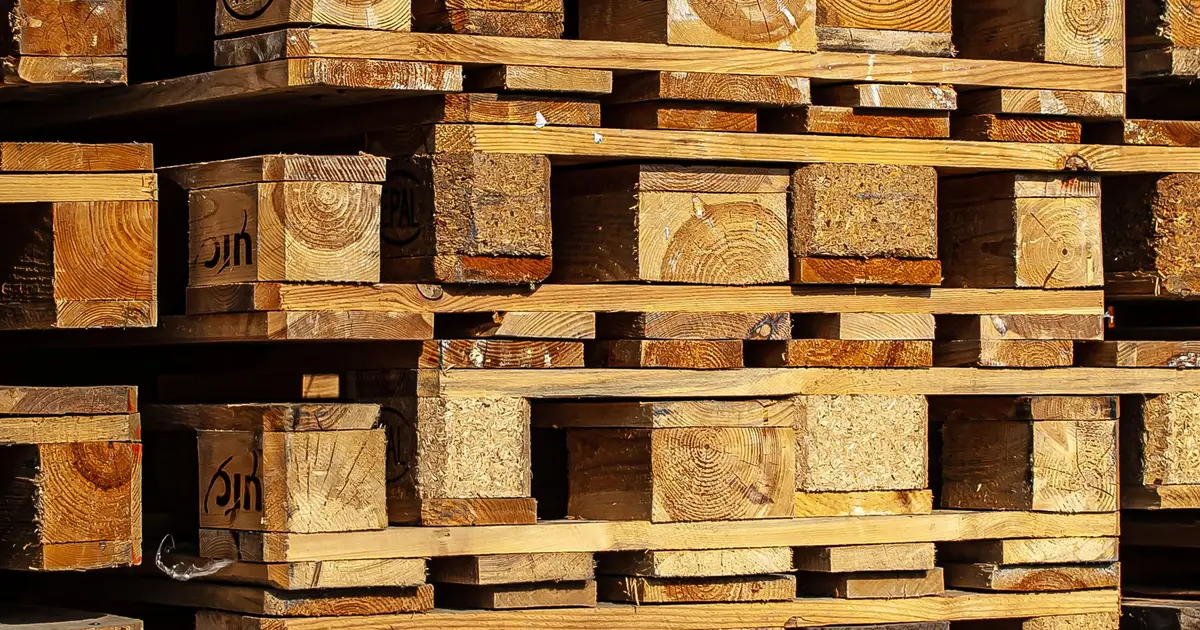
Moving hardwood across borders is not only a question of grade, moisture and freight. Wood can carry insects and fungi, and countries protect their own forests with rules on what may enter. For a buyer, those rules show up as three practical items on the order: a phytosanitary certificate, a treatment such as heat or fumigation, and a mark on any wooden packaging in the container.
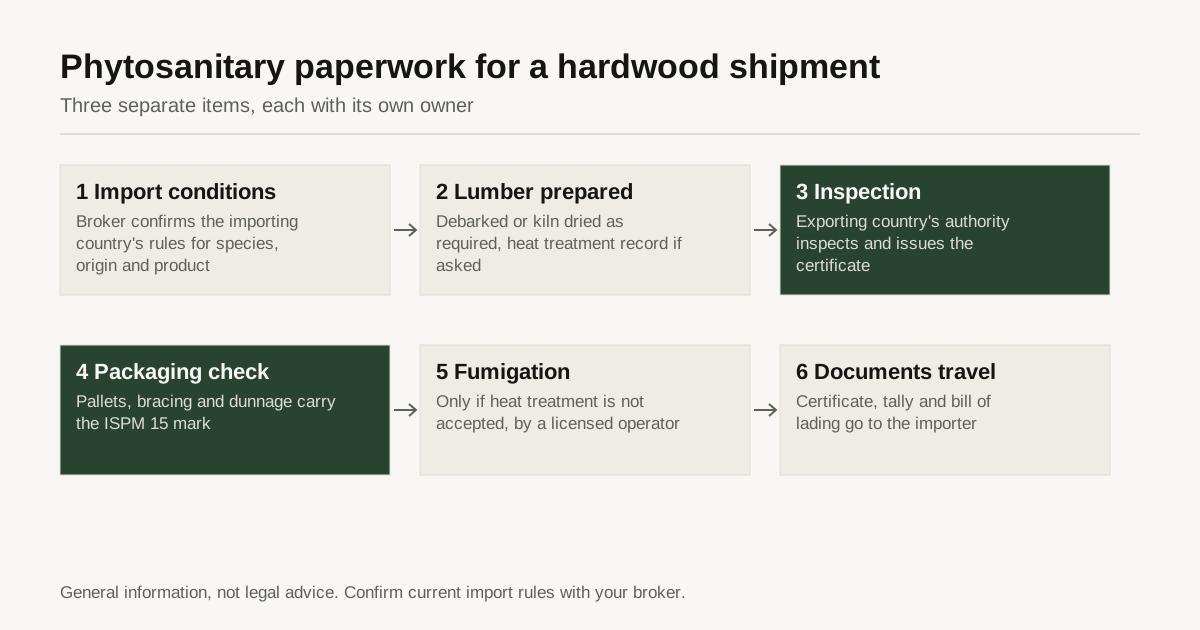
This guide explains each of them in plain terms, who issues what, and how to put the requirements on an RFQ so the supplier quotes the right paperwork. Rules differ by country, species and product and change from time to time. This is general information, not legal advice. Check the current rules for your route with your broker or your plant protection authority.
Three different things people call “phytosanitary”
Buyers often use one word for three separate requirements:
- A phytosanitary certificate for the lumber itself. This is a government document saying that the shipment was inspected and meets the importing country’s plant health conditions.
- A treatment such as heat treatment or fumigation, with a record or certificate. This is how the wood or the container is made safe when the importing country asks for it.
- ISPM 15 marking on wood packaging material. This applies to pallets, crates, bracing and dunnage used in the shipment, not to the lumber you are buying.
Mixing these up causes expensive mistakes, such as a container held at the port because the blocking timber had no stamp, even though the lumber certificate was perfect.
Phytosanitary certificate for lumber
The certificate is issued by the plant protection organization of the exporting country, after an inspector checks the shipment or the supplier’s process. In the United States, for example, the agency is USDA APHIS, usually working through state or approved inspectors. Other countries have their own bodies.
The certificate typically names the exporter, the consignee, the product, species, quantity and any treatment performed. It may include an additional declaration, which is a statement added to meet a specific import condition, for example that the wood is debarked or kiln dried to a stated moisture content.
Points to know:
- Importing countries decide. Some do not ask for a certificate for kiln dried, debarked sawn lumber. Others ask for one on every shipment of wood.
- Specific species and origins can have conditions. For example, some importers have set conditions for oak wood from certain origins because of oak wilt, and for ash wood from areas affected by emerald ash borer. These conditions can include debarking, kiln drying with a mark or stamp, and a certificate with an additional declaration. Check the current text of the rules.
- Timing matters. The certificate is issued close to shipment and refers to the actual consignment, so it cannot be prepared months ahead.
- It is not a legality document. The phytosanitary certificate says nothing about where the tree was harvested. Legality is covered separately by records such as Lacey Act declarations and due diligence under timber regulations, which are a separate topic from plant health.
Bark is the usual trouble spot. Most pest rules treat bark and bark-covered wood as higher risk, so many importers ask for debarked lumber. For wood packaging, ISPM 15 treats wood as bark free if any remaining pieces are smaller than 3 cm in width or smaller than 50 square centimeters in area. Sawn, edged hardwood lumber normally has little bark, but boards with wane and live edges may keep some.
Treatments: heat and fumigation
When the importing country asks for treatment, two methods are common.
Heat treatment
Heat treatment, written HT, raises the temperature of the whole piece of wood. Under the ISPM 15 schedule, the core must reach at least 56 C and stay there for at least 30 continuous minutes. The supplier must keep records of the schedule and the sensor readings.
Heat treatment and kiln drying overlap, but they are not the same thing. A kiln run can meet the HT schedule if the core temperature is measured and logged, and many kilns are set up this way. Kiln drying alone, without temperature records, is not a certified heat treatment. If your destination requires heat treatment, say “certified heat treatment, with record” on the RFQ instead of “kiln dried”.
Fumigation
Fumigation exposes the wood to a gas in a sealed container or chamber for a fixed time at a set dose. Methyl bromide has been the traditional fumigant. It is an ozone-depleting substance under the Montreal Protocol, and its use is limited or being phased out in many places, though exemptions exist for quarantine uses. Sulfuryl fluoride has been accepted as another treatment for wood packaging material under ISPM 15.
Fumigation depends on temperature, dose and exposure time, and the load must be ventilated afterward before people open it. Only licensed operators can carry it out. It adds cost, time and sometimes a stop at the port. A fumigation certificate lists the fumigant, dose, exposure time and the date.
| Item | Applies to | Issued by | Typical use |
|---|---|---|---|
| Phytosanitary certificate | The lumber consignment | Exporting country’s plant protection authority | Required by some importers, often with debarking or drying conditions |
| Heat treatment record | Lumber or packaging | The treating mill or kiln operator, under official rules | Meets ISPM 15 or a destination’s own condition |
| Fumigation certificate | The lumber, packaging or the container | Licensed fumigation company | Asked when heat treatment is not accepted or not possible |
| ISPM 15 mark | Pallets, crates, bracing, dunnage | The treating firm, registered with the authority | Always for wood packaging in international trade |
Packaging, dunnage and stickers
The least visible part of the shipment is often the one that gets the container stopped. Any wood used to block, brace or support the cargo is wood packaging material. This includes pallets, crates, bearers, bracing timbers and dunnage. They need the ISPM 15 mark, which shows the IPPC symbol, the country code, the producer code and the treatment code (HT for heat treatment or MB for methyl bromide).
A few practical points:
- Ask the supplier whether the bracing timber and any pallets have the mark. Photos of the marks help.
- Stickers placed between layers of lumber can count as packaging, depending on the destination and how they are used. Ask your forwarder what the importing authority expects.
- Wood that is made of processed material, such as plywood or oriented strand board, is outside ISPM 15, and very thin wood is also excluded.
- Reused pallets are allowed if they carry a valid mark and are in good condition. Unmarked or badly marked wood can cause the whole container to be refused.
Our container loading guide explains bundles, tally and blocking, which is where these wooden items appear.
What it costs and how long it takes
Treatments and certificates add cost and time. The size of both depends on the country, the treatment and the volume, so use these as pointers instead of numbers:
- Certificates carry inspection and issue fees and need the inspector’s availability. Ask the supplier how many days to allow.
- Heat treatment is often cheaper than fumigation when the supplier already has a kiln that records core temperature.
- Fumigation adds days if it is done at the port, and it limits who can open the container.
- If documents are wrong, the container can be held, returned or destroyed. The cost of a mistake is far larger than the cost of a certificate.
How to put it on the RFQ
State the requirement as a result, not as a hope:
- Destination country and the port of arrival
- Whether a phytosanitary certificate is required and the additional declaration, if any
- Treatment required: none, certified heat treatment with record, or fumigation, and what the importer’s authority says
- Debarked or bark free, if asked
- ISPM 15 marking on all wooden packaging and bracing
- Who arranges and pays for treatment and certificate
- Who holds the original documents and how they travel, by courier or electronic
Ask your freight forwarder or customs broker for the importing authority’s current conditions for your product. Keep a copy of the text with the order. If the suppliers cannot meet it, you find out before the lumber ships.
Closing checklist
- Separate the three items: lumber certificate, treatment and packaging mark
- Get the current import conditions for your species and origin in writing
- Choose heat treatment with record where the destination accepts it
- Check that bracing timber and pallets carry the ISPM 15 mark
- Put every document on the RFQ with who issues it and who pays
If you want suppliers matched on paperwork as well as grade and species, send your lumber RFQ and tick the documents you need. We pass it to up to 3 mills or yards that say they can issue them, and they reply to you directly.
Frequently asked questions
Does sawn hardwood lumber need ISPM 15 treatment?
ISPM 15 covers wood packaging material such as pallets, crates and dunnage. Sawn lumber sold as a product is normally outside it. But blocking timber, pallets and sometimes stickers used in the load count as packaging, so they usually need the ISPM 15 mark. Importing countries may also ask for a phytosanitary certificate for the lumber itself.
Is kiln drying the same as heat treatment?
Not automatically. Kiln drying lowers moisture. An ISPM 15 heat treatment needs the core of the wood to reach 56 C for 30 minutes without a break, and the schedule must be documented. Some kiln schedules meet this and some do not. Some destinations accept a kiln-dried statement for lumber, others want a certified heat treatment.
Who decides whether my shipment needs fumigation?
The importing country's plant protection rules decide, and they change. Ask your freight forwarder or customs broker for the current import conditions for your species, product and origin, and put the required treatment and certificate on the RFQ. This guide is general information, not legal advice.
Know what you need? Send the spec.
Tell us the species, grade, thickness and board feet. We pass it to up to 3 mills or yards that carry it and reply within 24 business hours.
Send my lumber RFQ