Home / Hardwood species
Hardwood species: hardness, color sorts and how each is graded
The species sets hardness, color and price. The grade says how much of the board is clear. The color sort is a third choice on top. A usable lumber RFQ names all three.
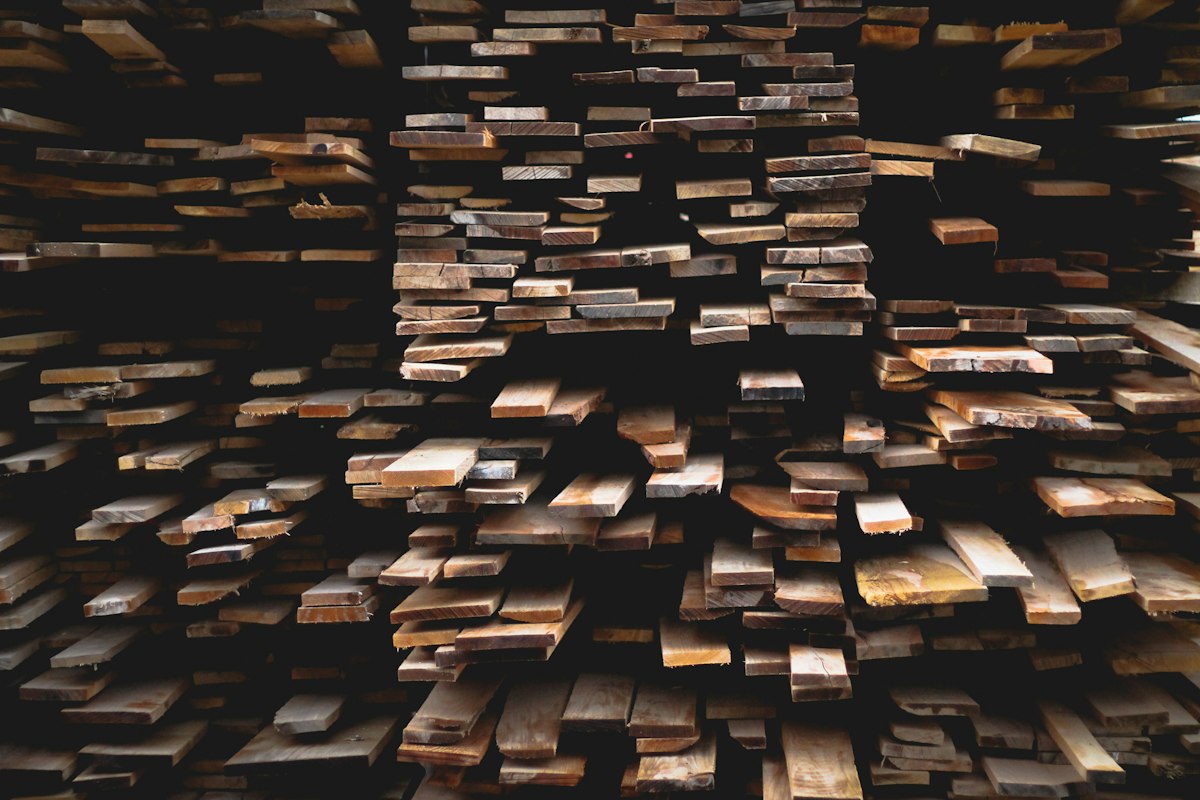
North American hardwoods
Graded under the NHLA rules unless noted. Janka hardness is the force in pounds to press a steel ball halfway into the wood, at about 12 percent moisture. Values are typical figures from published references such as the USDA Wood Handbook, not guarantees for any lot.
| Species | Botanical name | Janka (lbf, typical) | Color and grain | Common color sorts |
|---|---|---|---|---|
| Red oak | Quercus rubra and related red oaks | about 1,290 | Light reddish brown, open pores | Usually unselected, quartered on request |
| White oak | Quercus alba and related white oaks | about 1,360 | Light to mid brown, closed pores | Plain, quartered or rift sorts |
| Hard maple | Acer saccharum | about 1,450 | Creamy white sapwood, light brown heart | Unselected, white (sap) or No.1 and No.2 white |
| Soft maple | Acer rubrum, Acer saccharinum | about 950 (red maple) | Light, can carry gray mineral streaks | Unselected, white, or paint grade |
| Black walnut | Juglans nigra | about 1,010 | Chocolate heart, pale sapwood | Steamed or unsteamed, sap allowed or sap free |
| Cherry | Prunus serotina | about 950 | Pinkish brown, darkens with light | Sap allowed or limited sap on the face |
| White ash | Fraxinus americana | about 1,320 | Pale, open grain similar to oak | Unselected or white |
| Yellow poplar | Liriodendron tulipifera | about 540 | Cream to green heart, can show purple streaks | Unselected, sap or paint grade |
| Hickory and pecan | Carya spp. | about 1,800 | Strong contrast between white sap and red heart | White, red or calico (unselected) |
| Yellow birch | Betula alleghaniensis | about 1,260 | White sapwood, reddish brown heart | Unselected, red (heart) or white |
| Red alder | Alnus rubra | about 590 | Pale tan, even texture | Graded under western rules, clear or knotty |
| Basswood | Tilia americana | about 410 | Pale cream, fine even texture | Unselected, carving stock on request |
Typical. Hardness varies by growing region and by board. Read the USDA Forest Products Laboratory Wood Handbook for full property tables.
How hardness, stability and machining trade off
Harder is not always better. Hardness helps floors and work surfaces. It costs tooling life and makes nailing harder. Stability and machining often decide the species more than hardness does.
- Floors and stairsHickory, hard maple and white oak resist dents. Red oak is the price reference.
- Paint gradeYellow poplar and soft maple machine cleanly and take paint without grain showing through.
- Stain gradeRed oak and ash take stain evenly. Cherry and maple can blotch without a conditioner.
- StabilityQuartered and rift white oak move least across the width. Hickory and beech move most.
- Carving and turningBasswood and alder for carving, hard maple, beech and cherry for crisp turned detail.
- Outdoor contactWhite oak heartwood resists decay far better than red oak, which wicks water through open pores.
Imported hardwoods and their grading
European and tropical species are often graded under different rules from NHLA, measured in cubic meters rather than board feet and dried to a different target. Compare quotes on the same basis.
| Species | Botanical name | Typical grading | What to know |
|---|---|---|---|
| European oak | Quercus robur, Quercus petraea | Graded under European rules such as EN 975-1 or mill grades (prime, QB, rustic) | Sold boules (whole logs sawn and kept together) or square edged. Grades are not NHLA, so compare by description and photos. |
| European beech | Fagus sylvatica | EN 975-1 or mill grades | Steamed (pinkish) or unsteamed (pale). Hard and fine textured, common in chairs and turned parts. |
| Sapele | Entandrophragma cylindricum | Often FAS under NHLA rules, sometimes tropical shipper grades | About 1,400 lbf. Ribbon stripe on quartered faces, interlocked grain that tears on planing. |
| Khaya | Khaya spp. | Often FAS under NHLA rules or shipper grades | Sold as African mahogany. Lighter and softer than sapele. Write the botanical name on the RFQ. |
Tropical lumber is often shipped kiln dried to about 12 percent. Interior work in dry climates may need re-drying to 6 to 8 percent. See lumber processing for drying routes.
Paperwork follows the species
US imports of plant products need a Lacey Act declaration naming genus, species and country of harvest. Some tropical species are listed under CITES and need permits. FSC and PEFC certified stock is common in some domestic species and scarce in others. This is typical information, not legal advice.
Tick the paperwork you need on the lumber RFQ and we only match suppliers that say they can issue it.
- Botanical nameWrite genus and species, not only the trade name.
- OriginCountry and, for imports, region of harvest.
- CertificationFSC or PEFC claim on the invoice, with a valid certificate number.
- Listed speciesCheck the current CITES lists before quoting a tropical species.
Questions about species
We are a matching service, not a sawmill. We pass your spec to up to 3 mills or yards that carry the species, grade and thickness and reply within 24 business hours. See hardwood applications for the species usually chosen for each end use.
Which hardwood is hardest for flooring?
Among common domestic species, hickory and pecan are the hardest at about 1,800 lbf on the Janka scale, followed by hard maple at about 1,450 and white oak at about 1,360. Red oak at about 1,290 is the reference many flooring buyers compare against. Janka values are typical for the species, not guarantees for a lot.
Do NHLA grades cover color?
No. NHLA grades measure how much clear wood a board yields. Color is a separate sort that you add to the order, such as white maple, sap free walnut or red hickory. Ask the supplier what percentage of the face the sort allows and whether it applies to one face or both.
Why should I write the botanical name on the RFQ?
Trade names overlap. Soft maple can mean red or silver maple, and African mahogany can mean several Khaya species. US imports also need the genus and species on the Lacey Act declaration, so the botanical name avoids both quality and paperwork mistakes.
What can I use instead of ash?
White oak is the usual substitute when the open grain look matters. Hickory can stand in for strength and impact, as in handles and sports goods. Thermally modified or plantation species are options for some exterior uses. Approve a sample before switching, because color and movement both change.
Species detail pages
One reference page per species: grades, thicknesses, typical properties and what to write on the RFQ.
- White Oak Lumber: Grades, Thicknesses and PropertiesWhite oak lumber for buyers: the species in the white oak group, NHLA grades by thickness, plain, rift and quartered cuts, typical properties and an RFQ line.
- Red Oak Lumber: Northern and Southern, Grades and UseRed oak lumber for buyers: northern vs southern red oak, open pores and where not to use it, color, NHLA grades, typical properties and an RFQ line.
- Black Walnut Lumber: Sapwood Rules, Steaming and GradesBlack walnut lumber for buyers: the modified NHLA walnut rules, sapwood and steaming, short and narrow board sizes, typical properties and how to write the RFQ.
- Hard Maple Lumber: White Sorts, Grades and HardnessHard maple lumber for buyers: sugar and black maple, white and unselected sorts, NHLA grades, mineral streak, Janka hardness and soft maple compared.
- Black Cherry Lumber: Color, Gum and GradesBlack cherry lumber for buyers: color that darkens with light, gum pockets and pith flecks, sapwood and steaming, NHLA grades, sizes and properties.
- White Ash Lumber: Properties, Grades and UsesWhite ash lumber for buyers: the white ash group, strength and shock resistance, NHLA grades and color, ash borer effects, ash import rules and an RFQ line.
Species guides
- Species
Hard Maple vs Soft Maple: Grade, Color and Best Use
Hard and soft maple lumber compared on hardness, color sorts, grading, drying and price, with guidance on which suits cabinets, floors and furniture use.
- Species
Hickory and Pecan Lumber: Hardness, Grade and Supply
Hickory and pecan lumber for floors, cabinets and tool parts: typical hardness, color sorts, grades, drying risks and supply, plus what to put on an RFQ.
- Species
Steamed vs Unsteamed Walnut: Color, Yield and Price
Steamed and unsteamed black walnut lumber compared: how steaming changes sapwood color, yield for visible parts, finishing and price, and how to order either.
- Species
Sapele, Khaya and African Mahogany Lumber for Buyers
Sapele, khaya and African mahogany lumber compared: hardness, figure, machining, grading and measure, and the legality paperwork to ask for before you order.
- Species
White Ash Lumber Supply After Emerald Ash Borer Losses
How emerald ash borer changed white ash lumber supply, what to check in lumber from dead or dying trees, and how to buy ash with clear grade and moisture terms.
- Species
Poplar Lumber for Paint Grade Millwork and Cabinets
Yellow poplar lumber for paint grade cabinets and millwork: which NHLA grades to buy, how streaks and wet pockets behave under paint, and what to put on an RFQ.
Know the species and the sort?
Send species, grade, color sort, thickness and board feet. We pass it to up to 3 suppliers that carry it and reply within 24 business hours.
Send my lumber RFQ