Guides / Species
Steamed vs Unsteamed Black Walnut: Color, Yield and What to Order
December 4, 2026
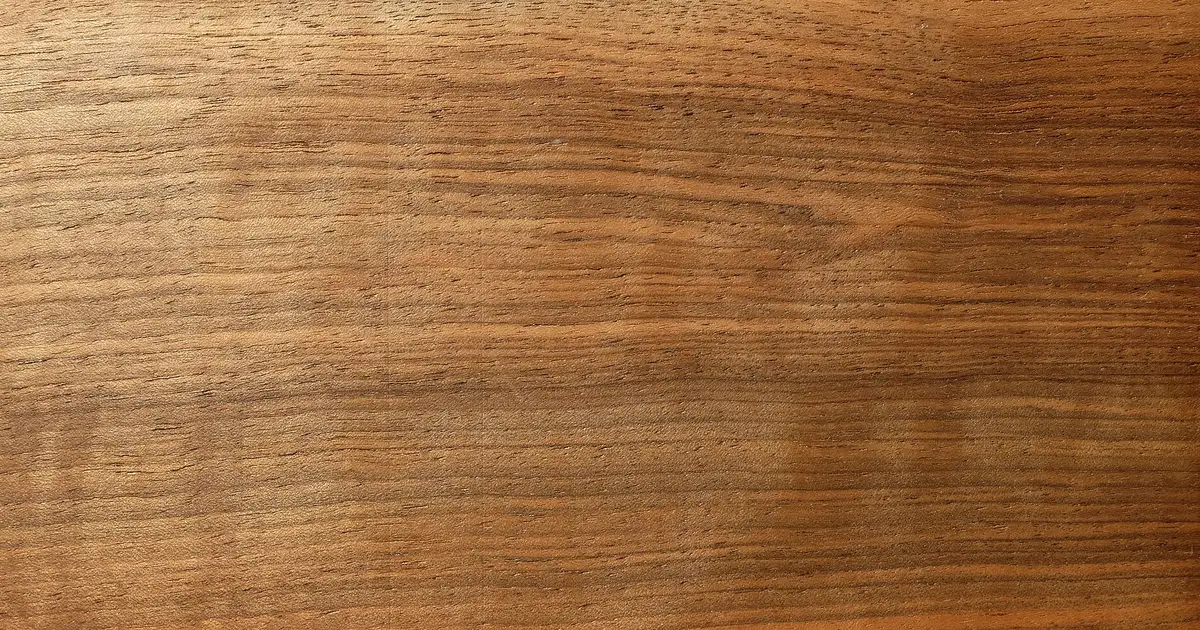
Black walnut is the premium dark hardwood in North America. It is also a color problem. Each board has a deep brown or purple-brown heartwood and a pale cream sapwood, and the two sit side by side on the same face. Whether you want that contrast, or want to remove it, decides whether you buy steamed or unsteamed walnut.
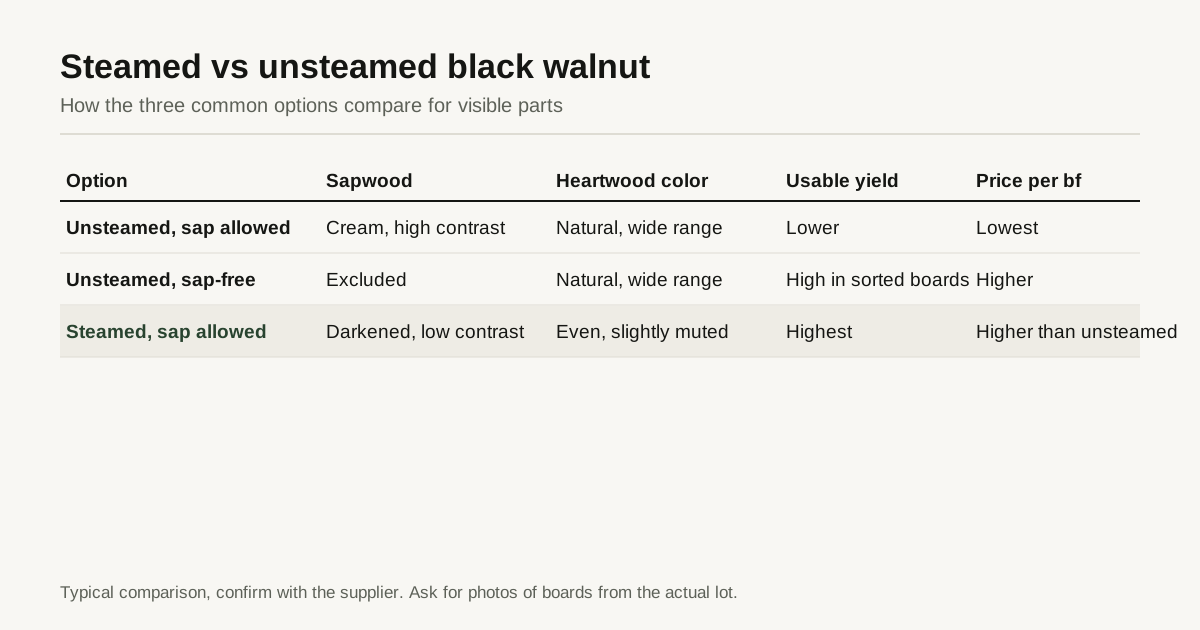
This guide explains what steaming does, how the two kinds compare on color, yield, finishing and price, and how to write the choice on an RFQ so the supplier quotes the lumber you have in mind.
What walnut steaming is
Steaming is a treatment applied to green or air dried walnut before kiln drying. The lumber goes into a chamber and is held in hot, humid air or steam for a set time, often one to a few days depending on thickness and the mill’s practice. Heat and moisture move water-soluble color compounds from the heartwood toward the sapwood and darken the sapwood, so it blends better with the heart. The overall color of the wood also shifts, often a little toward a more even, muted brown.
Mills steam walnut for three reasons:
- To make sapwood usable. Without steaming, sapwood looks bright against the heartwood and is often rejected for visible parts. After steaming, sapwood boards can be used in more parts.
- To even out color between boards. Steaming narrows the range from light to dark, which helps when many parts must match.
- To relieve some drying stress. Some mills report less stress and fewer drying problems with steamed walnut, though results depend on the process.
Steaming is a color treatment, not a grade. The NHLA grading rules do not mention it. It is a service the mill adds, and a buyer has to ask for it.
What unsteamed walnut looks like
Unsteamed walnut is dried as it is. The heartwood can range from light chocolate to deep purple-brown, sometimes with gray, green or red streaks. The sapwood is cream to pale yellow and clearly separated from the heartwood. Some buyers like that range, which gives the wood a natural, varied character, especially in solid furniture, tables and live edge work.
Because the contrast is strong, plants that need uniform color usually exclude the sapwood. They do this by ordering a sap-free sort, or by cutting the sapwood off at the machine.
Color, yield and finishing compared
Take a typical 4/4 FAS walnut board, 8 in wide. Sapwood can run in a band along one or both edges and can make up a large share of the face on smaller trees. The way you handle that sapwood changes your yield for visible parts.
| Option | Sapwood look | Heartwood color | Yield for color-matched visible parts | Finishing |
|---|---|---|---|---|
| Unsteamed, sapwood allowed | Cream, strong contrast | Natural, wide range | Lower, sapwood is cut away or hidden | Sapwood needs staining or toning to blend |
| Unsteamed, sap-free sort | Excluded | Natural, wide range | High within the sorted boards | Little toning needed, price is higher |
| Steamed, sapwood allowed | Darkened toward brown, lower contrast | More even, slightly muted | Highest, sapwood is usable | Takes finish more evenly |
Yield here means usable wood for parts you can see. A plant that makes hidden parts or paints some surfaces cares less about this.
Finishing notes
- Unsteamed sapwood takes stain differently from the heartwood. Many finishers tone the sapwood to match, which adds a step and an inspection point.
- Steamed walnut is easier to finish in one pass, but the color can look flatter, and some people find the result grayer or duller than natural walnut.
- Light exposure. Walnut lightens over time in sunlight. This happens with steamed and unsteamed wood alike, and a clear finish with UV protection slows it down.
Always test a sample with your own finish. Color after finishing can differ from the raw board much more than the difference between steamed and unsteamed raw wood.
How steaming affects price
Steaming adds cost: energy, handling, chamber time and some yield loss in the process. The supplier passes it on, and it is usually not a flat figure. The comparison that matters for a buyer is price per usable board foot for visible parts, not price per board foot on the tally.
Rough logic:
- Unsteamed walnut with sapwood allowed is normally the lowest price per board foot, but visible parts may need more sorting or cutting around sap.
- Sap-free unsteamed walnut costs more per board foot because the mill sorts boards and the sort has less volume.
- Steamed walnut usually costs more than unsteamed with sapwood allowed, but it can give the lowest cost per usable part when you need color uniformity and cannot afford to throw away sapwood.
Ask for quotes on two or three options and work out the usable yield on a typical cut list. Our guide to board feet and pricing shows how to compare quotes on the same basis.
Grade and sapwood terms
The NHLA grade for walnut follows the same basic rules as other species, measured by clear cuttings. Sapwood is treated more leniently in walnut than in some other species, so a board with sapwood can still make FAS. That is why the grade does not tell you the color. Terms you may see on tally sheets and quotes:
- SND, sap no defect. Sapwood is allowed and is not counted against the grade.
- Sap-free or select for color. A sort with no sapwood, or with sapwood limited to a set percent.
- Steamed. The lumber went through the steaming process.
- Color-sorted. Boards were sorted by heartwood color, for example dark or medium. Ask what the categories mean, because sorts differ between mills.
Write these in words on the RFQ, for example “FAS, 4/4, black walnut, steamed, sapwood allowed, kiln dried to 6 to 8 percent”. The exact terms vary by mill, so ask for photos of typical boards with a tape measure in the frame.
Drying and moisture
Walnut is a moderately slow drier. Steamed walnut is usually dried in the kiln after steaming and then conditioned. Check the same points as for other species: the final moisture range, conditioning and storage, and the possibility of internal stress. Our guide to kiln drying schedules covers the questions to ask, and the moisture meter guide shows how to check the load.
One more point: walnut is sensitive to rushed drying at high temperature, which can cause darker, more uneven color and checking. If the color of the dried lumber matters, ask how the mill schedules its kiln runs.
Questions to ask the supplier
Suppliers describe steaming in different ways, so a few direct questions save time:
- Is the lumber steamed before drying, and for roughly how long?
- Is the steamed color even across the lift, or do some boards come out lighter?
- How much sapwood remains, and how is it shown on the tally, as a percent or as a count of boards?
- Are heartwood color sorts offered, and what do the terms mean at this mill?
- Which boards are shown in the photos, and do they come from the lot you are buying?
- What is the final moisture content and how is it checked?
A supplier who steams on purpose usually answers these without hesitation. If the answers are vague, ask for a small sample lift or a set of boards photographed with a tape measure before you order a container.
Which should you order
Order steamed when:
- You need color uniformity across many parts, such as kitchens, offices or fixtures that must match
- You want to use sapwood on visible parts
- You prefer an even look over natural variation
- You buy in volume and the yield saving outweighs the premium
Order unsteamed, sapwood allowed when:
- Parts are hidden, painted or will be stained to a color that covers sapwood
- The look you want is natural walnut with some character
- You are buying live edge, table tops or solid pieces where contrast is part of the design
- Price per board foot is the main factor
Order unsteamed, sap-free when:
- You want natural walnut color with no sapwood on visible parts
- The part sizes are large and a sapwood band would cost you the whole part
- You can accept a higher price per board foot
Closing checklist
- Decide whether you want to use sapwood, hide it or avoid it
- Write steamed or unsteamed, and the sapwood rule, on the RFQ
- Ask for photos of typical boards, not catalog pictures
- Request quotes on at least two options and compare usable yield
- Test a finish sample on both kinds before ordering a full load
If you want several suppliers to quote both versions, send your lumber RFQ with the grade, thickness and the steaming and sapwood rule. We pass it to up to 3 mills or yards that carry walnut, and they reply to you directly.
See also: black walnut lumber, our reference page on walnut grades, sizes and sapwood rules.
Frequently asked questions
Does steaming change the strength of walnut?
Normal steaming for color has little effect on the strength that matters for furniture and cabinets, but it is a heat and moisture process and it can change drying behavior. If your parts are structural or highly stressed, ask the supplier for details on the steaming and drying schedule instead of assuming.
Is steamed walnut the same as sap-free walnut?
No. Steaming blends the sapwood color toward the heartwood so the sapwood is usable on visible parts. Sap-free walnut is a sort that excludes sapwood altogether. The first uses more of each board. The second gives the natural heartwood color with a higher price.
How do I tell if walnut has been steamed?
Look at the sapwood. In unsteamed boards the sapwood is cream or pale yellow and sharply different from the brown heartwood. In steamed boards the sapwood is darkened toward gray brown and the contrast is much lower. Because the effect varies, ask the supplier and write steamed or unsteamed on the order.
Know what you need? Send the spec.
Tell us the species, grade, thickness and board feet. We pass it to up to 3 mills or yards that carry it and reply within 24 business hours.
Send my lumber RFQ