Guides / Species
Hickory and Pecan Lumber: Hardness, Color Sorts, Grade and Supply
November 3, 2026
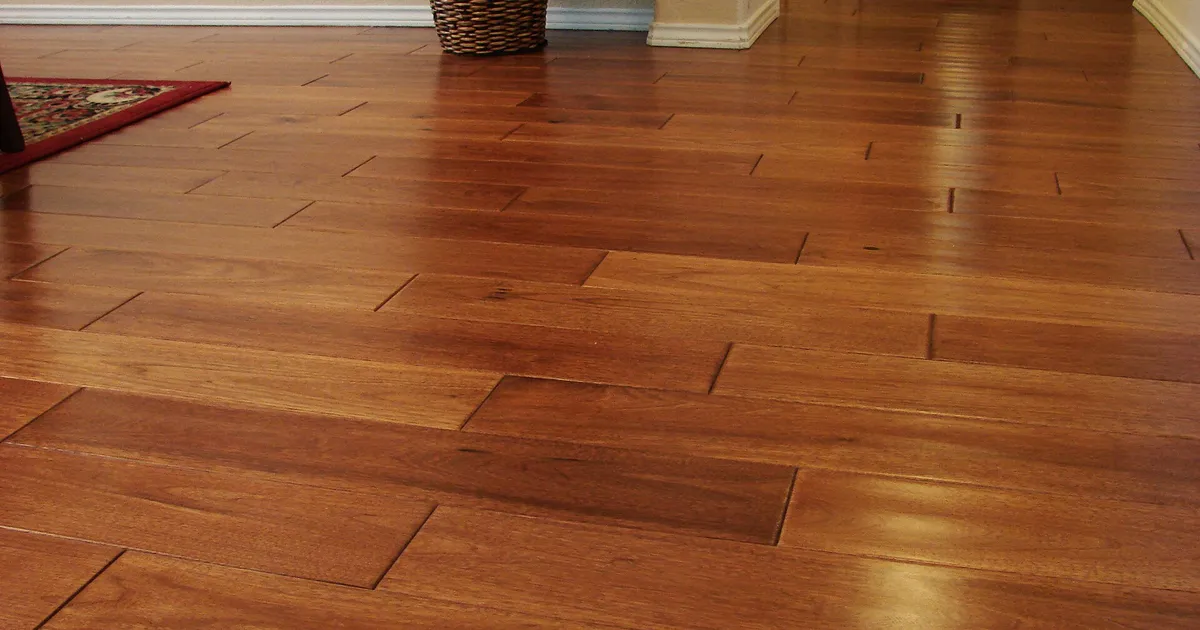
Hickory is the toughest of the common North American hardwoods. It makes axe handles, hammer handles and baseball bats, and in recent years it has become one of the leading species for rustic cabinet doors and wide-plank floors. Pecan, its close relative, shares much of the hardness with a warmer, more even color. Both are demanding to dry and machine, and both reward buyers who ask the right questions about color, grade and moisture.
This guide explains how hickory and pecan differ, how the lumber is sorted and graded, what goes wrong in drying and machining, and how to order so the supplier ships what you intend.
Which woods are in the group
Hickories belong to the genus Carya. Trade usually sorts them into two groups:
- True hickory: shagbark, shellbark, mockernut and pignut. The wood is dense, strong and has a pronounced difference between sapwood and heartwood.
- Pecan hickory: pecan, bitternut, water hickory and nutmeg hickory. The wood is generally a little lighter and softer and is more uniform in color, with a reddish-brown heartwood.
Mills commonly sell the two together and call the product “hickory and pecan.” Some sort them separately for flooring or tool handles. Individual species are rarely separated in lumber, so the color and the group are what you actually buy.
Hardness, density and weight
| Property | True hickory | Pecan hickory | Hard maple (for reference) | White oak (for reference) |
|---|---|---|---|---|
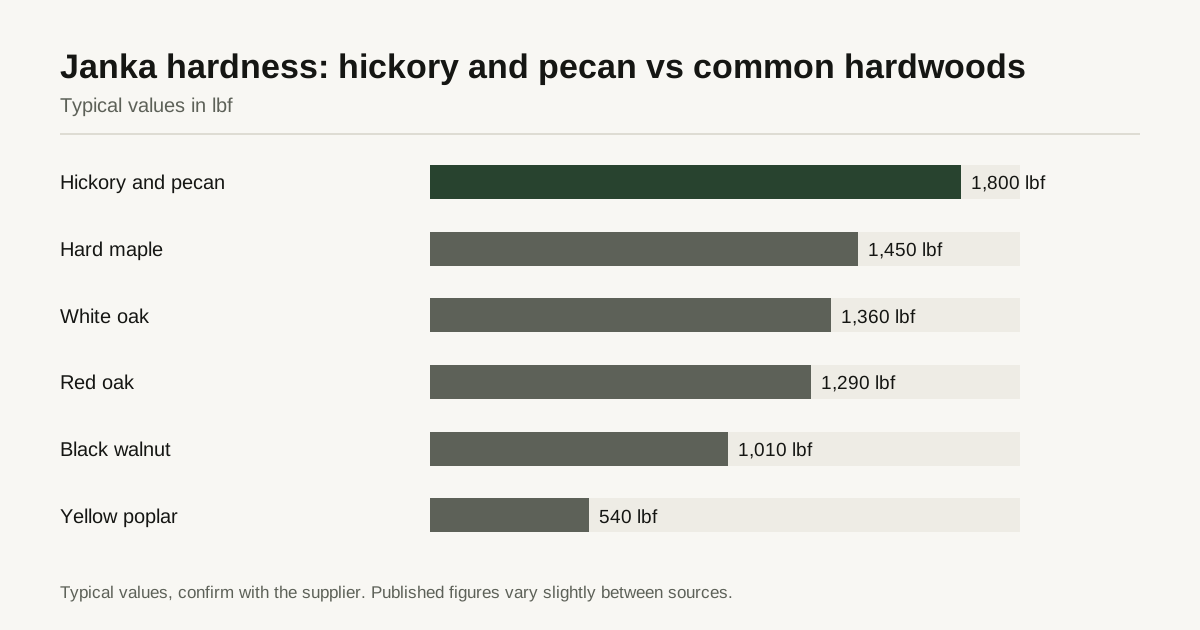
| Janka hardness | about 1,800 lbf | about 1,800 lbf, a bit lower for some species | about 1,450 lbf | about 1,360 lbf |
| Density at 12% moisture | about 800 to 850 kg/m3 | about 700 to 800 kg/m3 | about 705 kg/m3 | about 750 kg/m3 |
| Heartwood color | Light to medium brown | Reddish brown | Light to reddish brown | Light to medium brown |
| Sapwood color | White to cream | Pale tan | Cream to white | Cream |
| Movement with humidity | High | High | Medium | Medium |
Figures are typical values for the group. Individual boards and species vary, and published hardness numbers differ between sources.
Two practical points follow from density. First, hickory and pecan are heavy, so a container of dense lumber often reaches its weight limit before it is full. Second, the hardness that makes them good for floors and handles also makes them tough on knives.
Color sorts
Hickory has some of the strongest color contrast of any domestic hardwood. White sapwood and brown heartwood sit next to each other, often in the same board. Color sorts are the main way buyers control the look.
- White hickory: mostly sapwood, with at most a small share of heartwood.
- Red hickory: mostly heartwood, with some sapwood allowed.
- Unselected or mixed: any mix, which suits rustic work where contrast is part of the look.
Pecan is sorted in a similar way, with a smaller color difference. Ask what the percentages in each sort mean and whether the rule applies to one face or both faces. Standard NHLA grades do not set color, so the sort is added on top.
Many buyers choose unselected hickory deliberately, since the mix is cheaper and the contrast is a design feature in rustic kitchens and floors.
Grades and character
Hickory and pecan use the standard NHLA hardwood grades: FAS, Select, No.1 Common and No.2A Common. Our guide to NHLA grades explains the clear cutting yields. Several points are specific to this group.
- Character marks are common. Hickory shows mineral streaks, small knots, pin knots and sound wormholes more often than many species. Rustic cabinet and floor producers often want them and buy lower grades on purpose.
- Grade for flooring. Flooring stock is often graded by the producer, using terms such as select, No.1 common and rustic. Ask what the mill’s terms mean.
- Sound defects. Some specifications allow sound wormholes and tight knots. State clearly which defects are acceptable.
- Long clear boards are rare. Since hickory trees are often small and knotty, FAS volume is limited and priced accordingly.
If your parts are short, as in cabinet doors and flooring strips, No.1 Common often gives good yields at a lower price than FAS.
Drying, stress and movement
Hickory is one of the more demanding species to dry.
- High shrinkage. Hickory shrinks a lot between green and dry, and it moves with humidity afterward.
- Checking and honeycomb. Dried too fast, it checks on the surface and may develop internal cracks.
- Warp. Boards often twist and bow, especially in the sapwood.
- Case hardening. The wood holds stress, and boards can spring and pinch the saw when ripped.
- Long drying times. Kiln schedules are slow and gentle, and thick stock takes much longer.
The questions to ask are those in our kiln drying guide: schedule, conditioning, stress testing and the moisture range. For flooring and other parts where movement matters, ask for quarter sawn or rift sawn stock when budget allows, and see our guide to plain, quarter and rift sawn hardwood.
Also check moisture on arrival. Hickory that was dried correctly can still pick up moisture in storage and transit. Our moisture meter guide covers the method.
Machining and finishing
- Tooling. Use sharp carbide knives and blades. Dull tools burn the wood and tear grain.
- Feed. Keep feed steady. Slow feeds burn hickory.
- Fastening. Pre-drill for screws and nails, since hickory splits and snaps fasteners.
- Glue-up. Gluing works well when surfaces are fresh. Color match boards before gluing because the contrast shows.
- Finishing. Hickory takes finish well, though the large color difference between sapwood and heartwood stays visible under clear coats. Dark stains reduce the contrast. Always test a sample.
Where hickory and pecan fit
- Flooring: a hard floor with a lot of character. Check quarter sawn options for stability.
- Rustic cabinets and doors: frames with knots and mineral streaks in a style that suits country, ranch and lodge designs.
- Furniture and stairs: tables, benches, stair treads and handrails that must resist wear.
- Handles and sports parts: tool handles, mallets, ladder rungs and sporting goods use straight-grained, select true hickory.
- Millwork: trim and beams in rustic homes.
Hickory is not a good choice for jobs that need minimal movement, very fine uniform color or the lowest price. In those cases, maple, cherry or poplar may be better.
Supply and price
Hickory and pecan grow across the eastern and central United States, and sawmill supply depends on the region and the season. Hickory is usually cut alongside oak and other species in mixed hardwood logging, so its supply follows what the mills cut. Demand from flooring and cabinet plants affects the price, and the market can swing. Pecan supply is smaller, and the product is often mixed with hickory.
The price depends on the group, grade, color sort, thickness and dryness. Compare quotes on a usable-yield basis and with the same tally method, as explained in our guide to board feet and pricing.
Thickness, length and availability
Most hickory and pecan is sawn in 4/4, with 5/4, 6/4 and 8/4 available in smaller volumes. Thick stock takes much longer to dry, so mills carry less of it and quote longer lead times. Lengths are shorter on average than oak or maple, because hickory trees are often smaller, so a request for a high share of 10 ft and 12 ft boards in FAS may limit the number of suppliers who can quote. If your parts are short, say so, and let the supplier fit the lengths to the stock.
Dimension plants and flooring stock mills may carry the item already cut and dried. That can reduce lead time and drying risk, since the producer has control of the process from log to part. The price per board foot is higher, and you give up the freedom to choose the cuts.
Common mistakes
- Writing “hickory” and receiving a pecan-heavy mix, or the reverse
- Ordering white hickory without a percent rule and being surprised by the heartwood
- Buying FAS for short parts
- Skipping the moisture check, then watching floor boards gap after installation
- Using dull tooling and blaming the lumber for burn marks
- Forgetting that dense lumber hits the container weight limit before the volume limit
What to put on the RFQ
- Species group: true hickory, pecan, or hickory and pecan mix
- Grade: FAS, Select, No.1 Common, or No.2A Common, and any rustic specification
- Color sort: white, red, or unselected, with the percent rule
- Allowed character: mineral streak, sound wormholes, tight knots
- Thickness, surfacing, widths and lengths
- Sawing pattern: plain sawn, or quarter and rift sawn for stability
- Moisture: a target range and the upper limit for any board, and whether stress relief is required
- Packaging and tally method
Closing checklist
- Decide how much color contrast is acceptable
- Choose the grade by part length, not by prestige
- Name the allowed character marks
- Ask about drying, conditioning and stress testing
- Plan sharp tooling and pre-drilling in the shop
If you want hickory or pecan quoted by several mills, send your lumber RFQ with the group, color sort and grade. We pass it to up to 3 mills or yards that carry the species, and they reply to you directly.
Frequently asked questions
What is the difference between hickory and pecan?
Both belong to the genus Carya. True hickory (shagbark, mockernut, pignut and related species) is usually denser and stronger than pecan hickory (pecan, bitternut, water hickory). Mills often sell both under the name hickory and pecan, with color and grade sorts on top, so write which group and which color you want.
Why is hickory harder to machine than oak?
Hickory is dense and hard, with interlocked grain in places. It dulls knives quickly, burns on slow feeds and needs pre-drilling for screws and nails. Sharp carbide tooling and steady feed rates make a large difference.
Is hickory a good floor wood?
Hickory is one of the hardest domestic species used for flooring, with Janka hardness around 1,800 lbf. It is also a species that moves with humidity changes, so quarter sawn stock, proper drying and acclimation help.
Know what you need? Send the spec.
Tell us the species, grade, thickness and board feet. We pass it to up to 3 mills or yards that carry it and reply within 24 business hours.
Send my lumber RFQ