Guides / Cost and Ordering
Hardwood Container Loading for Exports: Bundles, Tally and Weight Limits
October 15, 2026
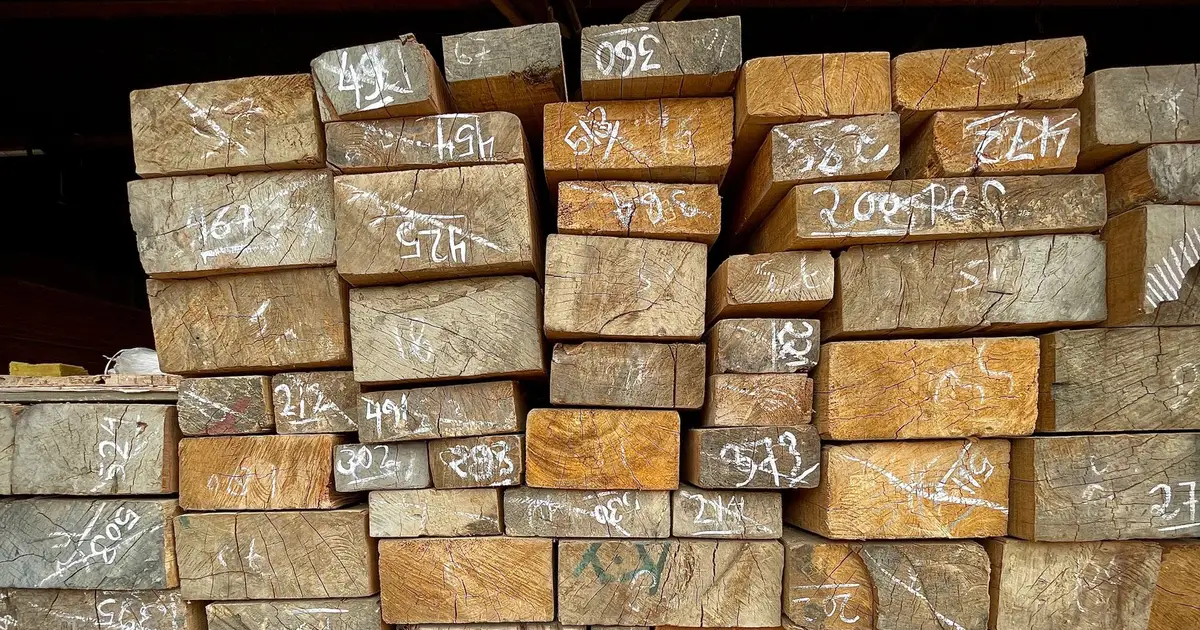
Container loading is where a good export order can go wrong. The lumber was graded, dried and tallied correctly, but then it was loaded in a way that crushed the bottom bundles, left gaps that let the load shift, or exceeded the weight limit so that the container could not leave the port. Buyers who understand the basics of bundles, tally and weight can ask better questions and catch most problems before the container is sealed.
This guide covers how hardwood lumber is bundled for export, how much fits in a 20 ft or 40 ft container, what a tally sheet should show and how to protect the load from damp. The numbers are typical and depend on the item. Always ask the supplier for the figure for your species, grade, thickness and length.
Container sizes and typical loads
Standard dry containers are the usual choice for hardwood lumber. The typical inside dimensions are:
| Container | Inside length | Inside width | Inside height | Cubic capacity | Typical hardwood load |
|---|---|---|---|---|---|
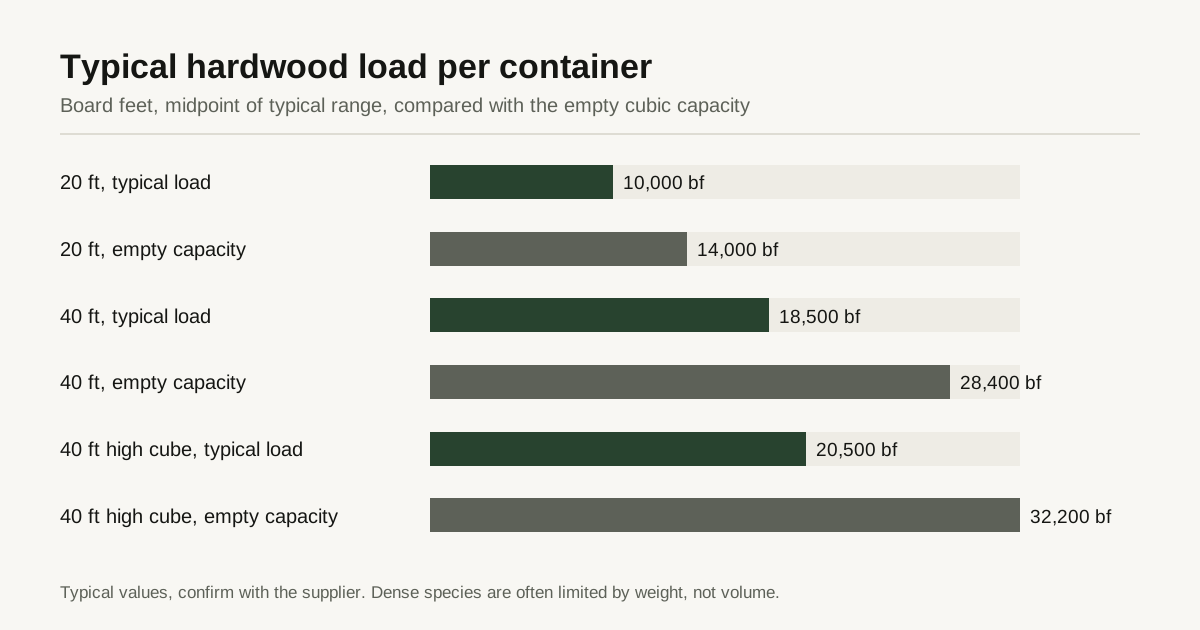
| 20 ft | about 5.9 m | about 2.35 m | about 2.39 m | about 33 m3 | about 9,000 to 11,000 board feet |
| 40 ft | about 12.0 m | about 2.35 m | about 2.39 m | about 67 m3 | about 17,000 to 20,000 board feet |
| 40 ft high cube | about 12.0 m | about 2.35 m | about 2.69 m | about 76 m3 | about 19,000 to 22,000 board feet |
One cubic meter is about 424 board feet. A 40 ft container full of air would hold about 28,000 board feet, but lumber does not fill a container completely. Bundles need space between them, stickers take up room and the door end needs clearance for the doors to close. Typical load figures therefore equal about 60 to 75 percent of the container volume. These are typical figures. Actual loads depend on the item.
Weight or volume: which one limits
A 20 ft container is more often limited by weight than by volume. A 40 ft container is more often limited by volume, unless the lumber is thick, dense or wet.
- Typical kiln dried oak weighs roughly 700 to 750 kg per cubic meter. Hard maple and hickory are heavier at roughly 700 to 800 kg per cubic meter. Poplar and soft maple are lighter at roughly 450 to 550 kg per cubic meter.
- Payload limits for containers are commonly in the range of about 26 to 28 tonnes for a 40 ft and about 27 to 28 tonnes for a 20 ft, though the exact figure is stamped on the container door and may be lower because of road limits.
- Road weight limits at origin and destination often cut the payload further, so the practical load can be well below the container rating.
For dense species, the practical maximum is often set by weight, not by what fits. For light species it is set by volume. If a supplier quotes a load size that seems high, ask what weight it implies.
How lumber is bundled
For export, hardwood lumber is normally packed in bundles, also called units or lifts. A typical export bundle is:
- Sorted by length. Boards in a bundle are the same length or are kept in a narrow range, with the ends flush at one end.
- Sorted by grade and thickness. One bundle holds one species, one grade and one thickness. Mixed bundles make the tally harder to check.
- Stickered or solid. Kiln dried lumber is often packed solid, without stickers, to protect it from air movement and to give more load. Green or air dried lumber needs stickers to keep drying.
- Banded. Steel or polyester strapping holds the bundle together, with edge protectors to stop the strap from cutting the top boards.
- Wrapped. Many exporters wrap the bundle in plastic or paper to protect it from rain and condensation. A wrap with open ends lets trapped moisture escape.
- Marked. Each bundle carries a tag with species, grade, thickness, length, piece count and board feet. Photos of the tags help at the receiving end.
Typical bundle sizes are about 1 m wide and 0.5 to 1 m high, though they vary. Smaller bundles are easier to handle by forklift and to load by hand. Larger bundles load faster with a forklift or a loading machine but need more care with weight on the floor.
Loose loading
For low-value lumber, thin boards and mixed items, mills sometimes load by hand without bundles. This puts more wood in the container because there is no wasted space between bundles. It takes more labor and makes the tally harder to check, and the boards are easier to damage. Many buyers accept loose loading for lower grades and insist on bundles for FAS and Select.
Loading and blocking
A well-loaded container has these features:
- A clean, dry floor. Check that the container is free of holes, damp spots and residue from earlier cargo. Wet floors damage the bottom layer.
- Even weight distribution. Heavy bundles go along the floor and spread across the width. Avoid putting the whole load toward the door or the front.
- Tight stacking. Gaps let bundles shift on rough seas. Bundles should touch the walls and each other, or be blocked with timber.
- Blocking and bracing at the doors. The last row is secured with dunnage, airbags or timber bracing to stop the load from falling against the door when it is opened.
- Protection for the doors. A bundle that pushes against the door can injure the person who opens it.
Photos are the cheapest quality control. Ask the supplier to photograph the empty container, the half-loaded container, the full container before the doors close and the seal number. The pictures make claims much easier to settle.
Tally: what the sheet should show
The tally sheet or packing list is the record of what the supplier says is in the container. It is the basis for the invoice and the customs documents. A good tally sheet shows:
- Container number and seal number
- Species and grade
- Thickness, in quarters or millimeters
- Bundle number, length, piece count and board feet or cubic meters for each bundle
- Totals per item and per container
- The tally method, for example rough nominal thickness, and whether the tally is measured or calculated
Our guide to board feet and pricing covers tally methods in detail. The point for export is to agree on one method in the contract, so that the buyer’s receiving count matches the supplier’s invoice.
Check the tally on arrival by counting bundles and pieces, comparing bundle tags with the sheet and measuring some bundles. A small difference in total board feet is normal, because lengths and widths round differently. Agree a tolerance in the contract, for example plus or minus 2 percent.
Protecting the load from moisture
Condensation is the main hidden risk. When a container loaded in a warm, humid place travels to a cold one, moisture in the air can condense on the cold roof and drip onto the load, a problem sometimes called container rain. Wood that was at 7 percent can pick up damp quickly where the drops fall.
Steps that reduce the risk:
- Ship lumber that is dried to the target moisture content, and verify the number
- Wrap bundles and keep the wrap sealed on top
- Use a dry, clean container with a sound roof
- Add desiccant bags or rods near the doors and along the roof for long voyages
- Avoid loading in the rain or when the lumber is cold and wet
Kiln dried lumber that stays in a damp yard before loading can also arrive wet. The kiln drying guide explains why storage after drying matters, and the moisture meter guide shows how to check the load at the dock.
Documents for the container
Each container needs documents beyond the tally: the commercial invoice, packing list, bill of lading and any certificates the destination demands, such as a phytosanitary or fumigation certificate and timber legality records. A verified gross mass (VGM) declaration is required before the container is loaded on a ship, so the weight must be known. This is general information, not legal advice. Check the rules for your route with your freight forwarder.
Questions for the supplier
- How many board feet or cubic meters of this item fit in a 20 ft and a 40 ft container?
- Is the load limited by weight or by volume?
- Are the bundles solid or stickered, banded and wrapped?
- Who loads, and will you send photos of each step?
- What will the tally sheet show, and what tally method does it use?
- What protection against condensation do you use?
Closing checklist
- Choose the container size for your item and weight
- Put the bundle spec, tally method and tolerance on the RFQ
- Ask for loading photos and the tally before the container is sealed
- Ask for moisture protection on long routes
- Check the load against the tally on arrival and report problems quickly
For where container loading sits in a full wholesale order, read wholesale hardwood lumber.
If you want container loads quoted by several suppliers, send your lumber RFQ with the item, the quantity in board feet or cubic meters and the destination port. We pass it to up to 3 mills or yards that ship hardwood and they reply to you directly.
Frequently asked questions
How many board feet fit in a 40 ft container of hardwood?
A typical range is about 17,000 to 22,000 board feet, or 40 to 52 cubic meters, depending on species, thickness, length and whether the load is volume limited or weight limited. Dense, thick stock tends to hit the weight limit first. Ask the supplier for the figure for your item.
What is a tally sheet?
A tally sheet lists what is in the load, usually by bundle: species, grade, thickness, length, piece count and board feet. It is the basis for the invoice and for checking the load on arrival, so ask for it before the container is sealed.
Can lumber get damp inside a closed container?
Yes. When a container moves from warm to cool conditions, moisture in the air can condense on the roof and drip on the load. Suppliers reduce the risk with dry lumber, wrapped bundles, desiccant and a dry container, but you should still check moisture on arrival.
Know what you need? Send the spec.
Tell us the species, grade, thickness and board feet. We pass it to up to 3 mills or yards that carry it and reply within 24 business hours.
Send my lumber RFQ