Guides / Choosing a Supplier
How to Choose a Hardwood Lumber Supplier
October 4, 2026
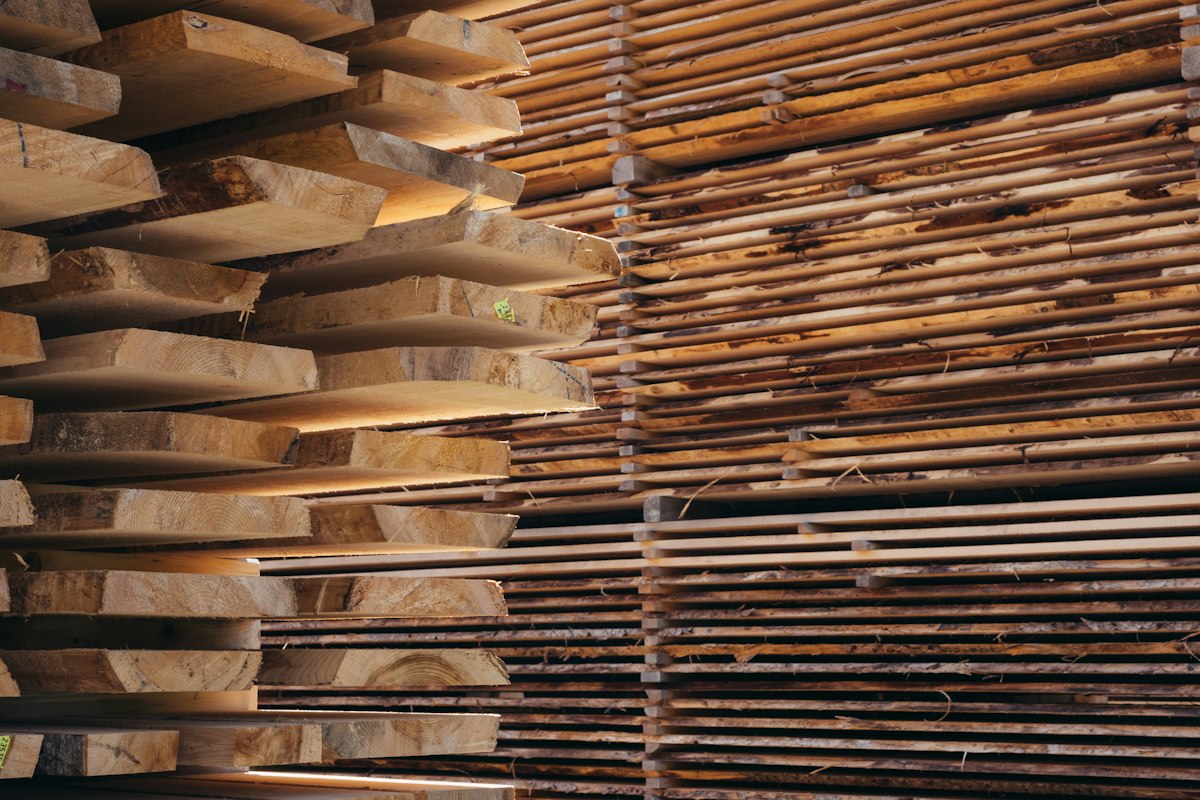
Plenty of companies sell hardwood lumber. Far fewer sell the species, grade and thickness you need, dried the way you need it, in the quantity you buy. Choosing a supplier is mostly about finding that fit, then checking that the supplier handles the details that decide whether the lumber works in your shop.
These are the checks that matter, in the order most buyers run into them.
1. Decide what kind of supplier fits your order
Hardwood passes through several kinds of companies between the log and your plant.
- Sawmills saw logs into lumber, grade it and sell it green or kiln dried. They usually sell in full lifts or truckloads and carry the species that grow near them.
- Concentration yards buy green lumber from many mills, dry it, regrade it and sell it in volume. They often have a wider range of species and thicknesses than one mill.
- Distribution yards sell smaller quantities and mixed lots, often surfaced or ripped, from stock.
- Exporters and importers move container loads between regions.
- Dimension plants sell parts cut from lumber: blanks, squares and components cut to your sizes.
A cabinet shop buying 800 board feet of three species a month is best served by a distribution yard. A flooring mill buying truckloads of No.1 Common red oak should buy from mills or concentration yards. Match the supplier type to your order before you compare prices.
2. Check that they carry your species, grade and thickness
Ask for a current stock list or a tally of the item you want. “We sell walnut” is not enough. You want to know if they have 8/4 FAS walnut, kiln dried, in the quantity you need, and whether it is steamed or not.
A supplier who carries the item regularly is worth more than one who can find it once. Ask how often the item is in stock and how they source it.
3. Agree on the grading rules
Most North American hardwood is graded under NHLA rules. European and tropical species may be graded under other rules or under the mill’s own grades. Write down:
- The grading rules the lumber is sold under.
- The grade, for example FAS or No.1 Common and better.
- Any color, width or length rules on top of the grade.
If you are not sure which grade fits your parts, the guide to NHLA grades explains how to work it out from your cut list.
4. Ask about drying and moisture content
For interior work, kiln dried lumber at 6 to 8 percent moisture content is the usual target. Ask:
- What moisture content the lumber is dried to and how it is checked.
- Whether the lumber is stress relieved after drying, since poorly conditioned lumber can cup or bow when you rip it.
- How the lumber is stored after drying. Kiln dried lumber stored outside or in a damp shed picks moisture back up.
Check moisture on arrival with a meter. A few readings from boards in different parts of the load are enough to catch a problem early.
5. Understand the tally and the price unit
Quotes can be per board foot, per thousand board feet (MBF), per cubic meter, per linear foot or per piece. Tallies can be on the rough or the surfaced size. Before you compare two quotes, ask each supplier:
- The price unit.
- Whether the tally uses the rough nominal thickness.
- How widths are rounded and lengths counted.
The guide to board feet and pricing covers tally methods in detail.
6. Check minimum order, packaging and lead time
Mills often sell by the lift or truckload. Yards sell smaller units. Ask about:
- The minimum order for the item and for a mixed load.
- How the lumber is packaged, for example stickered and banded lifts, and whether the lifts are wrapped.
- Lead time from order to shipment, for stock items and for items that need drying or milling.
For export orders, also ask how many board feet or cubic meters fit in a container for your item and how the container is loaded.
7. Ask for samples or photos
For a first order or a color-critical job, ask for a few sample boards or clear photos of the actual lumber with a tape measure in the frame. Photos of the ends of a lift show thickness, sticker spacing and color at a glance. A supplier who is confident in the stock usually has no trouble sending them.
8. Confirm the paperwork
Paperwork is part of the product, not an afterthought.
- Lacey Act. Imports into the United States need a declaration naming the genus, species and country of harvest.
- EU timber rules. Buyers in the EU need due diligence records on where the wood came from.
- FSC or PEFC. Certified lumber needs a valid chain of custody certificate and the claim on the invoice.
- CITES. A few tropical species need permits to cross borders.
Ask the supplier to confirm in writing which documents they will provide with the shipment. This is general information, not legal advice. Check the rules that apply to your import with your broker.
9. Work out the delivered cost
Lumber is heavy and bulky. Freight can change which supplier is cheapest. Ask whether the price is ex mill, delivered or FOB a port, who arranges the truck or container and who pays for loading. Then compare delivered cost per usable board foot, not the price on the first line of the quote.
Red flags
- The supplier cannot say which grading rules the lumber is sold under.
- Moisture content is “dry” with no number.
- The quote has no tally method and no price unit.
- No photos of the actual stock, only catalog pictures.
- Paperwork is promised “later” for a species that needs it.
Build a short list
For most buyers, two or three suppliers who reliably carry the core items are enough, plus one who can handle unusual requests. Keep notes on each delivery: grade, moisture, tally accuracy and lead time. After a few orders the right supplier is usually obvious.
For the whole buying sequence after you pick a supplier, from quote basis to claim, read wholesale hardwood lumber.
If you would rather not search, send your lumber RFQ. We read the spec and pass it to up to 3 mills or yards that carry your species, grade and thickness, and they quote you directly.
Frequently asked questions
Should I buy from a sawmill or a lumber yard?
Buy from a sawmill or concentration yard when you need full lifts or truckloads of one species, grade and thickness. Buy from a distribution yard when you need smaller mixed lots, surfaced stock or fast delivery. Many buyers use both.
How many suppliers should I get quotes from?
Two or three is usually enough if they all carry your species and grade. More quotes from suppliers who do not stock the item only add noise and slow the order down.
What moisture content should kiln dried hardwood have?
For interior furniture, cabinets and millwork in most of North America and Europe, 6 to 8 percent is the usual target. Flooring and exterior work can differ. State the target on the RFQ and ask how the supplier checks it.
Know what you need? Send the spec.
Tell us the species, grade, thickness and board feet. We pass it to up to 3 mills or yards that carry it and reply within 24 business hours.
Send my lumber RFQ