Guides / Grades and Specs
Sticker Stain and Gray Stain in Hardwood Lumber: Causes, Grade Rules and What to Do
February 6, 2027
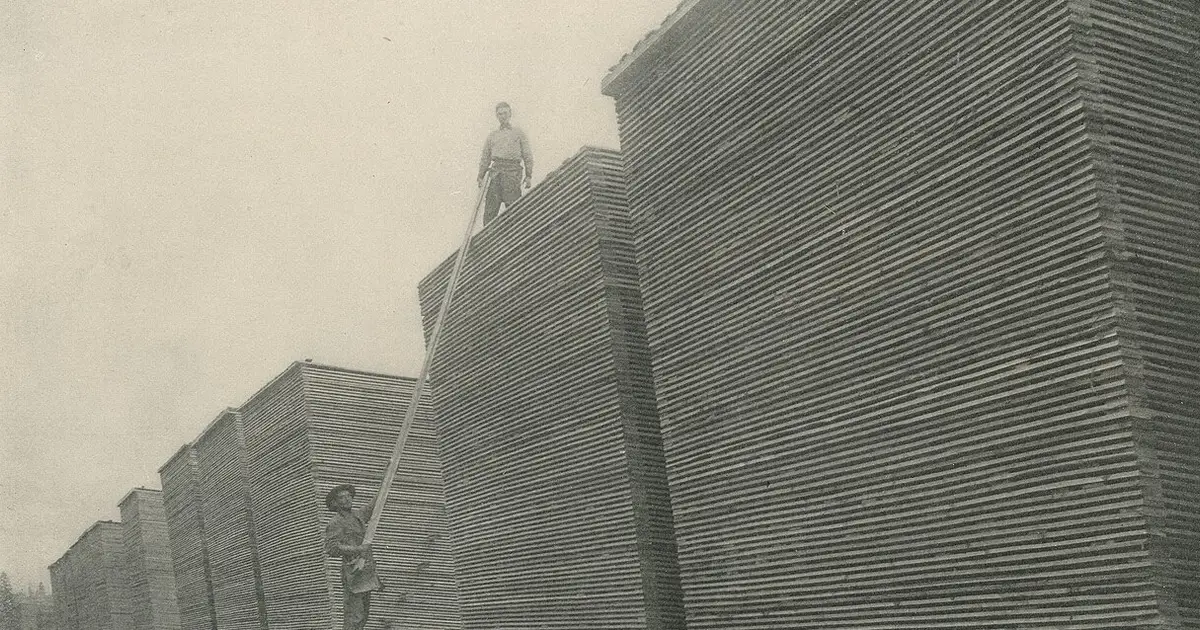
Sticker stain is a gray or brown band across a board where a drying stick sat, and it usually appears only after the board is planed. It is a chemical stain, not a fungus. The only practical cure is fast drying under the stickers, which is the mill’s job and is finished before the wood reaches you. For a buyer the questions are different: whether the grade you pay for allows it, whether your finish will show it and how to write the order so the argument never starts. This guide covers the stain types, the mill practices behind them, what the grade rules say and what to write.
This is general information as of October 2026. I could not open the NHLA rule book, so the grade points come from the American Hardwood Export Council (AHEC), and the drying numbers are a 1998 extension specialist’s guidance, so treat them as directional.
What sticker stain looks like
Sticker stain is a discolored area that runs across the width of the board at the spot where a sticker lay during drying. AHEC describes it as stain typically gray in color that comes from the stickers used to season lumber. Gene Wengert, then an extension specialist in wood processing at the University of Wisconsin-Madison, wrote that it is typically not seen in the rough lumber and is only evident after planing. So you can receive a rough lot that looks clean and find the stripes at your own planer.
Do not confuse it with a sticker mark. AHEC defines a sticker mark as the impression a seasoning sticker leaves, which can be removed in surfacing, and lists it as not a defect.
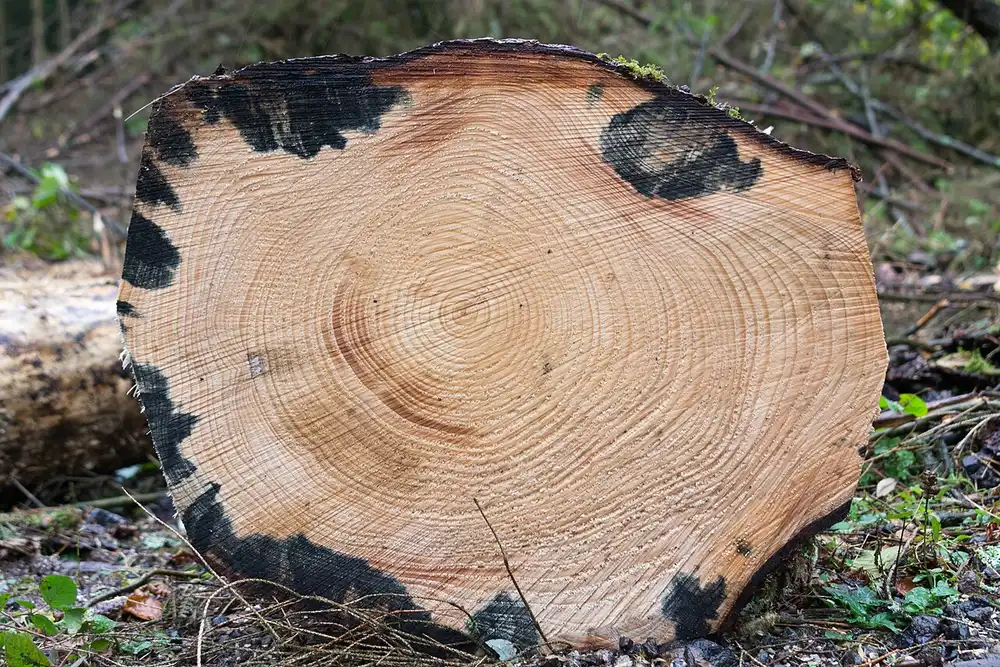
Stain types on a quote
Wengert’s 1998 summary separates the stains that get called by the same name:
| Type | Looks like | Cause | Notes |
|---|---|---|---|
| Sticker stain | Gray or brown band across the width at each sticker | Chemical, natural wood compounds oxidize during slow drying | Often visible only after planing |
| Interior gray stain | Gray or darker discoloration inside the board | Chemical, same family | Noted especially in southern oak, hackberry, maple and ash |
| Pinking or browning | Color change in light woods such as hard maple | Chemical | See hard maple against soft maple |
| Iron stain | Dark blue to black, mainly in oak | Tannin, water and iron, for example rusty kiln metal or steam pipes | Bleaches with oxalic acid |
| Sap stain (blue stain) | Blue, gray or black in sapwood | Fungus, needs wood above about 22% moisture | Does not weaken the wood, oxalic acid does not bleach it |
One test separates them. Wengert says a drop or two of oxalic acid bleaches chemical and iron stains but not fungal stain. Photograph the board first, since bleaching removes the evidence.
Why it happens and what to ask the mill
Wengert’s cause is slow drying, probably under 5% moisture loss a day, at warm temperatures between 50 and 130°F while the wood is above 40% moisture. The stain forms when naturally occurring chemicals react with air, and he says stain is almost inevitable in lumber sawn from old logs, however good the kiln operator is. He lists other pressures: light finishes, no oxalic acid bleaching in finishing and a surplus of white woods that makes customers pickier.
He also gave practices that lower the risk. Each one becomes a question for a supplier:
| Mill practice | Wengert’s 1998 figure | Question to ask |
|---|---|---|
| Log storage in warm weather | Under 2 weeks | How long do logs wait before sawing? |
| Stacking after sawing | Within 12 hours in warm weather | How fast is green lumber stickered and dried? |
| Sticker moisture | 8 to 10%, about 1 1/4 in wide, 3/4 or 7/8 in thick | Are stickers dry and consistent? |
| Early kiln conditions | Initial temperature 110 or 120°F, at least 10°F wet-bulb depression within 6 hours | Does the schedule start cool and dry? |
| Airflow and load | Load narrower than 16 ft, air velocity over 500 fpm, fans reversed every 2 hours | How is the kiln loaded and circulated? |
| Temperature ceiling | No more than 160°F except equalizing and conditioning | What is the schedule maximum? |
No mill will give you its schedule line by line, and the figures are advice from 1998, not a standard. The point is to find out whether the supplier knows its stain rate and sorts for it. Our kiln drying guide covers schedules in more detail.
What the grade rules say
AHEC’s grading pages list sticker stain among defects that are sound and allowed in the clear cuttings of No. 2B Common, together with bird pecks, sound knots and worm holes. They add that features such as sapwood and sticker marks are not treated as defects. I could not confirm how the rule handles stain in FAS, Select or No. 1 Common, so I will not say it is excluded there.
Two practical consequences follow. First, grade is set on clear cuttings, so a stain that is allowed in a grade can still ruin a clear, light finished face. Second, AHEC says defects such as checks, stain and warp are disregarded for grading if planing removes them at standard surfaced thickness. Sticker stain often shows when planing, which is where the rough grade and your finished face part ways. This is my reading, not a rule: ask whether the lot was graded rough or after surfacing. See NHLA grades explained and rough, S4S and dimension parts.
Decide by finish
| Your finish | Risk | What to write |
|---|---|---|
| Clear or light, natural color: doors, stair treads, flooring stock | High | No sticker stain or gray stain on the show face, approved on a surfaced sample before the order |
| Medium stain | Medium | Allow faint stain only if it sits in the cutting waste, and agree it on a sample |
| Opaque paint or dark finish | Low | Allow it, and do not pay a premium for a stricter rule |
| Hidden or structural parts | Very low | Allow it |
What to write on the RFQ
- Species, grade, thickness in quarters and surfacing, as in the RFQ checklist.
- A stain rule in words, for example: no sticker stain or gray stain on the better face of any cutting, or limited to a stated share of boards.
- Whether the grade is applied rough or after surfacing.
- A pre-shipment sample: two or three boards surfaced to your finished thickness and photographed, front and back, with a tape measure.
- Drying: kiln dried, with the moisture target and how it is measured, see kiln dried against air dried.
- The window and method for reporting a problem after arrival.
To receive quotes that state a stain rule, send your lumber RFQ with the finish, grade and volume. We pass it to up to 3 mills or yards that say they can supply it, and they reply to you directly.
If you find it
- Stop machining that lot until you know the share affected. Planing more boards turns a claim into a dispute about what you used.
- Photograph planed boards with the bundle tag and a tape measure in the frame, and note where each band falls along the board.
- Count affected boards in a few bundles and compare with the rule in the order.
- Identify the type: bands across the width at regular spacing point to stickers, patches in sapwood to fungus. Use the oxalic acid test last, on a spare board.
- Send the photos and counts to the supplier inside the window in your order. For the full routine see inspecting a hardwood delivery.
Sources
- WoodWeb, Causes and cures for sticker stain (Wengert, 1998)
- WoodWeb, Causes and cures for stains in dried lumber (Wengert, 1998)
- American Hardwood Export Council, NHLA grading terms: characteristics and defects
- American Hardwood Export Council, board feet, tally and surfaced thickness
Frequently asked questions
Is sticker stain a defect in hardwood lumber?
It depends on the grade and the buyer's use. AHEC lists sticker stain among features that are sound and allowed in the clear cuttings of No. 2B Common, and treats sticker marks, which plane out, as not a defect. I could not open the NHLA rule book for the upper grades, so write your own face rule on the order.
Can sticker stain be removed?
I found no source that says deeper planing reliably removes it. Wengert says the only practical complete cure is fast drying under the stickers, which happens at the mill. After drying, test it by planing a sample board to your finished thickness and judging the stain under your own finish.
What is the difference between gray stain and sap stain?
Gray or interior stain is chemical, from natural wood compounds reacting with air during slow drying. Sap stain, or blue stain, is a fungus in sapwood and needs wood above about 22% moisture. A drop or two of oxalic acid bleaches chemical stain and iron stain but not fungal stain, per Wengert.
How do mills prevent sticker stain?
By drying fast under the stickers: fresh logs, quick stacking after sawing, dry stickers, low early kiln temperature and strong airflow. Wengert's 1998 figures include stickers at 8 to 10% moisture and stacking within 12 hours in warm weather. Ask the mill how it handles these steps.
Know what you need? Send the spec.
Tell us the species, grade, thickness and board feet. We pass it to up to 3 mills or yards that carry it and reply within 24 business hours.
Send my lumber RFQ