Guides / Cost and Ordering
Getting Paid on Hardwood Lumber Exports: Deposit, L/C and CAD for the Mill
April 1, 2027
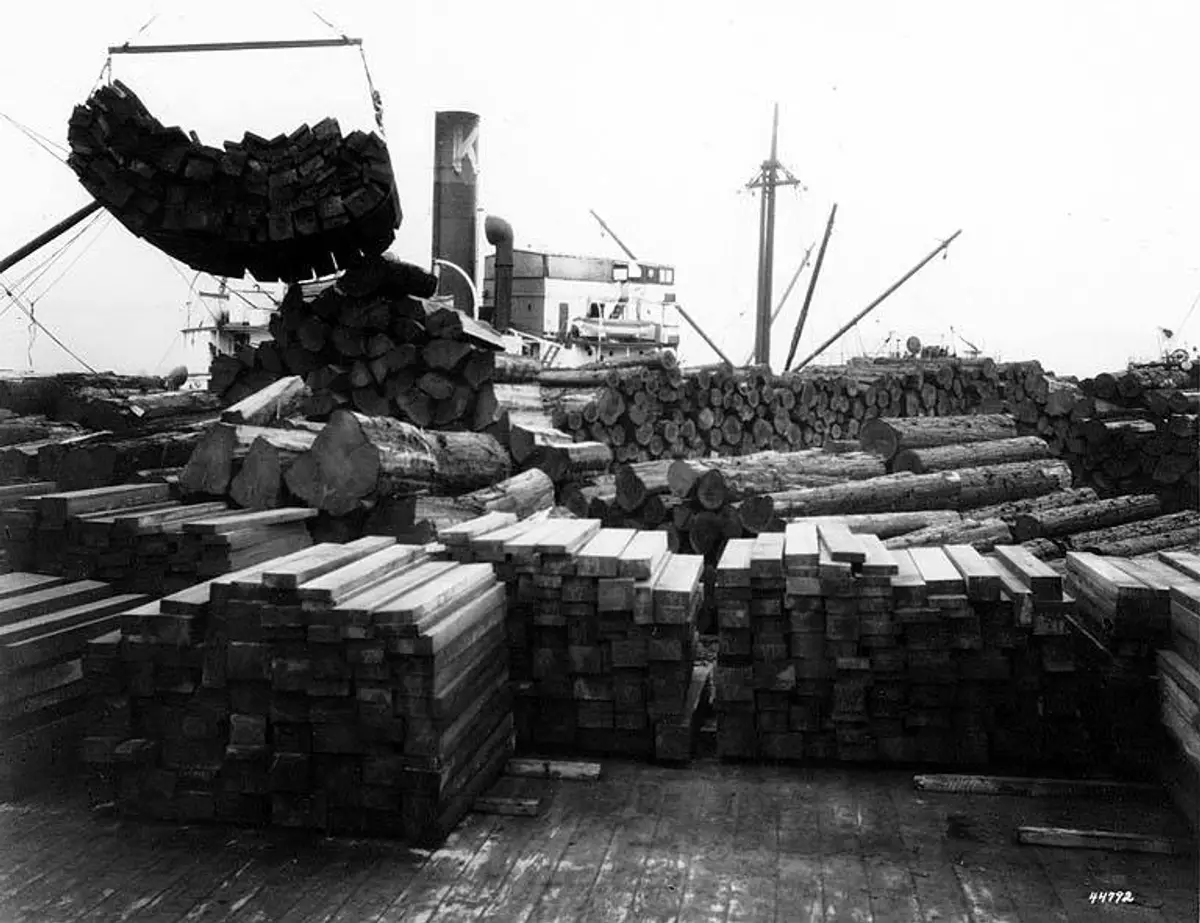
A sawmill that ships a container of hardwood lumber has handed over most of its working capital for the weeks it takes to reach the buyer. Getting paid on that container comes down to one choice: how much of the risk the payment method leaves with you. The US International Trade Administration ranks the common methods from safest to least safe for the exporter as cash in advance, letter of credit, documentary collection and open account, with consignment last. This guide is for the owner or export sales engineer of a mill or yard and goes through each method from the seller’s chair: what to ask for, what to check and where lumber exports go wrong.
It is general information as of October 2026, not legal or banking advice. I found no public data on how many hardwood export invoices go unpaid or on typical deposit sizes in lumber trade, so no loss rate or standard deposit is given. Your bank and forwarder confirm the details for your route. Our guide for buyers, lumber import payment terms, covers the same methods from the other side, which helps you see what the buyer will push back on.
The methods in order of seller risk
| Method | What it means for the mill | What to ask for | Typical buyer pushback |
|---|---|---|---|
| Cash in advance | Almost no risk to you, the buyer carries it | Wire to your company account before production or shipment | Cash flow strain, some buyers decline |
| Letter of credit | A bank commits to pay if documents match the credit | Irrevocable credit, ideally confirmed by your bank | Bank charges and tied up credit line |
| Documentary collection (D/P, D/A) | Banks pass documents but do not verify them or guarantee payment | Documents against payment, never against acceptance on a first order | Cheaper than a credit, buyers prefer it |
| Open account | You ship first and wait for payment | Only after clean shipments, and consider credit insurance | Buyers prefer it, it favors them |
| Consignment | You are paid only after the buyer sells | Rarely suitable for a mill selling a container | Common ask from distributors |
The Trade Finance Guide says of cash in advance that the exporter is exposed to virtually no risk, and of open account that it carries substantial risk to the exporter because the buyer could receive the goods and default. The same guide notes that cash in advance can cost sales to competitors who offer better terms. Your choice is a balance between that and the risk you can carry.
Deposit and balance by wire
Most first container orders end up as a mix: a deposit by wire when the order is confirmed and the balance against documents or by letter of credit. The Trade Finance Guide calls a wire transfer the most secure and preferred form of advance payment for the exporter. A few habits protect the mill:
- Tie the deposit to a proforma invoice that repeats species, grade rule and grade, thickness, surfacing, drying, volume with the tally basis, price with its unit and the Incoterms rule with a named place. Our guide to quoting hardwood lumber for export shows the rows.
- Start sawing or kiln loading only when the funds are in your account. A screenshot of a transfer is not funds. Wait for your bank to show the credit.
- Write down what happens to the deposit if the buyer cancels after you have sawn to order and if you cannot ship by the agreed date. Silence on this is where deposit disputes begin.
- Send the balance terms in the same document. If the balance is due before the container is released, say so, and say whether it is due against a bill of lading copy or the originals.
Other forms of advance payment are weaker. The guide says a cheque can take weeks to months to collect and can bounce or be stopped after shipment, and that credit cards suit mainly small consumer sales, where the seller carries processing fees and the risk of unfounded disputes. Cross-border escrow, where a third party holds the money until the importer accepts the goods, sounds safe, but the guide says that if the importer rejects the goods they must be returned in satisfactory condition before a refund. For a container of kiln dried lumber that sits in a foreign port, that is a hard condition to meet. Read the escrow rules before you agree.
Letter of credit: what a mill checks the day it arrives
A documentary letter of credit is a bank’s commitment to pay when documents match its terms. The International Trade Administration describes it as one of the most secure instruments available to international traders. The Trade Finance Guide adds that the importer pays its bank for the service and that banks deal in documents only, not goods. That second point shapes everything a mill does with a credit.
Read the credit before you start production. Do not wait until the container is loaded. Compare each line with what you can actually produce and ship:
- Goods description. It should match your invoice wording for species, grade, thickness and drying. A credit that names a different grade or a species you do not sell cannot be met.
- Dates. The shipment date and the expiry. Under UCP 600 article 14(c), a presentation with original transport documents must be made no later than 21 calendar days after the date of shipment and never after the credit expires. Count backward from the expiry through kiln time, loading and the days to reach your bank.
- Documents required. Invoice, tally or packing list, bill of lading, plant health certificate, legality papers and any inspection certificate. Each one must be something you can obtain in time. A condition such as an inspection certificate from a named agency means you must book that agency before loading.
- Ports and routing. The ports named in the credit must be the ones you ship through.
- Partial shipments and transshipment. If the credit forbids them and your route needs them, ask for an amendment.
- Who is named. Your company name and address exactly as on your invoice.
If any line cannot be met, ask the buyer to amend the credit before you ship. The Trade Finance Guide warns that credits create opportunities for discrepancies that may negate payment to the exporter, and recommends that documents be prepared by trained professionals or outsourced. For a mill that means working with your forwarder or bank’s document desk and matching the documents word for word, not in spirit.
Shipment date and the bill of lading. UCP 600 article 20(a)(ii) treats the issue date of a bill of lading as the shipment date unless an on-board notation shows otherwise. If you ship by container under FCA, the International Chamber of Commerce says the buyer and seller may agree that the buyer instructs its carrier to issue an on-board bill of lading to the seller after loading, which the seller then presents, usually through banks. That matters for a credit that requires an on-board bill of lading. Settle it in the contract. Our guide to container loading covers weights and tally that must also match the documents.
Confirmation. A confirmed credit adds a second bank’s promise to pay, typically your own bank. The guide says that without it you carry the foreign bank’s payment risk and the political risk of the importing country, and that with it your bank pays against compliant documents before being reimbursed by the issuing bank. Whether to ask for it depends on the issuing bank, the buyer’s country and the size of the shipment. Who pays for the confirmation is a negotiation point, so settle it in the contract rather than after the credit arrives.
CAD and documentary collection: ask which one the buyer means
In lumber trade “CAD” is used loosely. There are two quite different things behind it, and the risk to the mill is not the same.
| What the buyer calls CAD | How it works | Risk to the mill |
|---|---|---|
| Documentary collection, documents against payment (D/P) | Your bank sends the documents to the buyer’s bank, which releases them only against payment at sight | Moderate. Banks do not verify documents or guarantee payment, and recourse is limited |
| Documentary collection, documents against acceptance (D/A) | The buyer receives the documents after accepting a time draft, a legal promise to pay on a future date | Higher. You lose control of the goods once accepted and payment is not assured at maturity |
| Wire against scanned copies | The buyer pays by wire after receiving emailed copies of the documents | You release the container papers on trust, since no bank holds the originals |
The Trade Finance Guide says that under a D/P collection, if the importer does not pay, the exporter may need to dispose of, return or redirect the goods. For lumber in a foreign port that is costly. The same guide says collections suit established relationships and ocean shipments and are not appropriate for air shipments. It describes the ocean bill of lading as a document that controls delivery of the goods, which is why a collection works only when the bank, not the buyer, holds the original until payment. On a first order from a new buyer, ask for a credit, or a deposit plus the balance against original documents by D/P. Do not accept D/A.
Open account and credit insurance
Open account means you ship first and the buyer pays on a later date, often 30, 60 or 90 days later according to the US International Trade Administration. It is one of the highest risk options for an exporter. It can be reasonable after a run of clean shipments with a buyer you know, and sometimes it is the price of keeping a customer.
Export credit insurance can reduce that risk. EXIM, the US export credit agency, says its insurance protects foreign receivables from both commercial and political losses, covers buyer non-payment and pays up to 95 percent of sales invoices. Policies can cover a single buyer, a few buyers or an entire export portfolio. The Trade Finance Guide adds that cover is also offered by private insurers, recommends using a specialized insurance broker to compare options and says the cost is generally much less than letter of credit fees. EXIM serves US exporters. A mill in another country should ask its own export credit agency or a broker what exists locally. A policy sets conditions such as buyer limits and notice of late payment, so read it before you rely on it.
Match the terms to the order
These are suggestions, not rules. Your bank and the buyer’s record decide what is workable.
| Situation | Structure to ask for |
|---|---|
| First container to a new buyer | Letter of credit, confirmed if the issuing bank or country worries you, or a deposit plus the balance by D/P against original documents |
| Small trial lot | Full payment by wire before shipment, with photos of the lot sent first |
| Lumber sawn to order | A deposit that covers sawing and kiln time, with the cancellation terms written down |
| Repeat orders after clean shipments | D/P, then open account with a credit limit, ideally insured |
Two more checks belong before the quote goes out. Confirm the buyer exists and trades as it says: ask for the company registration, a bank reference and a contact you can call at a number you looked up yourself. And confirm every change of bank details by phone before you change anything on your side, in either direction.
Write the payment row into your quote
A quote with “payment to be agreed” invites the buyer to propose the weakest option for you. Put the structure in the quote: the method, the percentage and the trigger for each part, the currency, who pays each bank’s charges and the last date for payment. Our guide to why sawmills lose hardwood RFQs lists the payment row with the other rows buyers compare. If a claim is possible later, the purchase order should also say how long the buyer has to raise it and what evidence it must send. See the lumber quality claim and pre-shipment lumber grading for how mills keep evidence that supports their side.
When the buyer pushes back
You can trade without giving up the protection that matters most. Offer a letter of credit instead of a large deposit if the buyer’s cash is the concern. Split the order so the second shipment is released after the first is paid. Offer open account only for an amount you can afford to lose, and insure it if you can. If the buyer accepts none of these on a large volume, a polite no keeps your cash. As our guide to a mill’s first export order says, the first container is a rehearsal to get right, not a deal to win at any price.
Talk to us
If you sell hardwood lumber and want buyer requests that name species, grade, thickness, drying and paperwork, so you can answer each row, see for suppliers. Tell us your species, grades, drying, tally basis and minimum order. Talk to us if you want to go through how a quote and its payment terms should read for your stock. We reply within 24 business hours and we make no promise of orders.
Sources
- International Trade Administration, methods of payment in international trade
- International Trade Administration, Trade Finance Guide (2022 edition)
- EXIM, export credit insurance
- ICC Digital Library, UCP 600 articles 14(c), 16 and 20(a)(ii) (case note)
- ICC, Incoterms 2020 compared with 2010 (FCA, on-board bill of lading)
Frequently asked questions
What is the safest way for a sawmill to get paid on an export order?
Cash in advance leaves the seller with almost no risk, according to the US International Trade Administration, but few importers will pay all of it before shipment. The next safest method it describes is a letter of credit, because a bank commits to pay once the documents match. A confirmed credit adds your own bank's promise on top.
What does a confirmed letter of credit do for the mill?
A confirmed credit adds a second bank's promise to pay, usually the seller's own bank. The Trade Finance Guide says that without confirmation the exporter carries the foreign bank's payment risk and the political risk of the importing country. Who pays the confirmation charge is a point to settle in the contract, not a default.
Is cash against documents (CAD) safe for a lumber container?
It depends on which kind. A bank documentary collection holds the original bill of lading until the buyer pays, but banks neither verify the documents nor guarantee payment, and recourse is limited. A wire against emailed copies of documents gives you no such hold. Ask the buyer which one it means before you quote.
Can a sawmill insure against a buyer who does not pay?
Export credit insurance covers non-payment by foreign buyers. EXIM, the US export credit agency, says its policies cover foreign receivables against commercial and political losses, up to 95 percent of sales invoices. It serves US exporters. A mill elsewhere should ask a local insurer or a specialized broker what it can offer.
Know what you need? Send the spec.
Tell us the species, grade, thickness and board feet. We pass it to up to 3 mills or yards that carry it and reply within 24 business hours.
Send my lumber RFQ