Guides / Choosing a Supplier
How a Sawmill Lands Its First Export Order for Hardwood Lumber
March 19, 2027
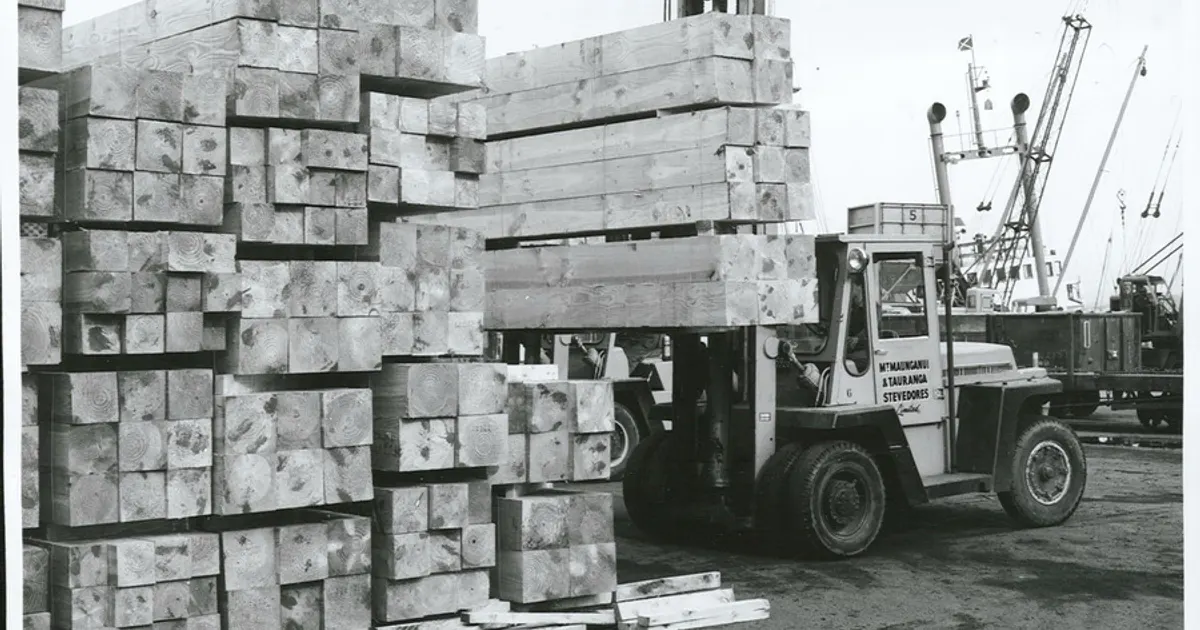
A sawmill lands its first export order when three things line up: an item it can ship again and again, a buyer who can find it and a quote and paper set the buyer can accept without a round of questions. The order itself is rarely the hard part. The hard part is being quotable the day the right buyer writes. This guide goes through what to settle before then and what to do on the first container, written for the owner or sales engineer of a mill or yard that has sold only at home.
It is general information as of October 2026, not legal or shipping advice. Rules differ by route, so confirm them with your forwarder and customs broker. I found no public figure for how many first orders succeed or what a typical first order is worth, so none is given.
Decide what you can ship twice
A buyer overseas wants a lot they can order again, so start with items, not countries.
- Choose two to four items. For each, the species by botanical name, the grade under a named rule such as NHLA, thickness in quarters, rough or surfaced, and the drying and moisture range you can hold.
- Count what you can supply, not what you have today. A first buyer who likes a container will ask for the second. Say what you can ship per month or per season in board feet or cubic meters.
- Check whether size is an obstacle. A 2009 Forest Products Journal study of small and medium forest firms found that hardwood lumber exporters differed significantly from other manufacturers in their transportation methods, marketing activities and production profiles, and were significantly larger in total production and employment. I read only the abstract. It does not say a small mill cannot export. It says exporters in that sample were larger, which is a reason to ask honestly how steady your supply is.
- Write your minimum. A container is not a small order. Our guide to the hardwood lumber minimum order shows how many board feet a container can hold by weight and by space, so you can state a number your buyer can plan on.
The US Commercial Service gives a four-step export plan that fits a mill too: assess the product, research the markets, decide on pricing and define how you will find buyers. It also asks whether an export license is needed and what it costs to get the product to market.
Reach a buyer
There is no single route, and the first order often comes from a channel you did not plan.
- An export merchant or exporter. A 1984 Forest Products Journal abstract on small southern softwood mills calls indirect exporting through export merchants the most rewarding sales channel for a firm new to exporting. It says merchants keep the sale in the domestic setting, avoid adding new middlemen and offer sorting. They expect solid integrity, a long-term commitment to exporting and better-than-average manufacturing flexibility and quality control. The study is old and about softwood, so take the principle, not the figures. The American Hardwood Export Council keeps a list of its exporter members, which is one place to see who works with mills.
- A direct importer or yard abroad. This gives you the buyer relationship and the whole job of quoting, shipping and chasing payment.
- A matching service. We register mills and yards and pass on buyer specs that fit. Buyer and mill deal directly.
- Your own page. Buyers research before they write. Our guide to what a sawmill should publish for export buyers lists the facts they look for.
Reply fast and completely. A buyer with several mills to choose from can act on a clear quote right away, and a reply that only asks questions back leaves the buyer to do the work.
Quote so the buyer can compare
A quote that cannot be compared gets set aside. Put these in writing:
| Item | State | Why it matters |
|---|---|---|
| Product | Species, grade rule and edition, thickness, surfacing | Buyers compare like with like |
| Measure | Board feet or cubic meters, net or gross | A gross tally buyer can expect about 7% fewer board feet after kiln drying, per the American Hardwood Export Council |
| Incoterms rule | FCA or FOB with a named place | Decides who pays what and where risk passes |
| Lead time | From a named event | A date with no event is not a promise |
| Validity | How long the price stands | Prices move |
| Payment | Terms agreed before loading | See lumber import payment terms |
On the Incoterms rule, the International Chamber of Commerce says that where goods go to a carrier before they are loaded on a ship, as with containers, the seller is well advised to sell on FCA terms rather than FOB, and that FCA now allows an optional on-board bill of lading for sellers who need one. Many buyers still ask for FOB, so be ready to explain the difference and ask your forwarder where your responsibility really ends. Our guide to quoting hardwood lumber for export walks through a worked container example.
Get the paper set ready
Paper is where first orders slip. Build the set before you quote and the first container runs faster.
- Species and origin data. The US Lacey Act requires an importer to file a declaration with the scientific name of the plant, the value and quantity of the shipment and the country of harvest. The importer files it, so your job is to give accurate data on every lot. Our guide to the Lacey Act declaration shows each field and the mill record that supports it.
- EU buyers. The European Commission says wood is a covered commodity under the deforestation regulation, that it applies from 30 December 2026 to large and medium operators and from 30 June 2027 to micro and small operators, and that operators must be able to show that products do not come from recently deforested land. An EU buyer will ask what harvest data you can supply and from when. Our guide to EUDR due diligence for sawmills lists the data.
- Plant health and drying. Many buyers need proof that lumber is dry and treated. NHLA describes a Kiln Drying Certification program that validates a company’s drying process and documentation against industry standards, and says it achieves the same goals as the APHIS phytosanitary certificate at a lower cost to the business. That is NHLA’s own statement, so confirm with your buyer’s authority which one it accepts. See our page on the phytosanitary certificate for lumber exporters.
- Shipping set. A commercial invoice, a packing list or tally sheet and a bill of lading are the usual core. Your forwarder confirms the rest for the route.
- Export filing. If you ship from the United States, the Commercial Service’s Export Mechanics training covers Electronic Export Information filing in the Automated Export System and says a freight forwarder can act as the authorized agent to file it. Outside the United States, your customs authority sets the rule.
Run the first container
Treat the first container as a rehearsal you want to get right.
- Choose a forwarder early. Ask one that already ships lumber to your buyer’s region. It books the container, tells you which documents the route needs and, as noted above, can file the export declaration where one is required.
- Agree the tally method and a tolerance in the order, as in our guide to the lumber tally sheet.
- Weigh against the container limit. For dense species the weight limit comes before the space limit. See container loading.
- Photograph the load. The empty container, the half loaded container, the full container before the doors close and the seal. Our guide to lumber photos for buyers lists the set.
- Send the tally and photos before the container sails, not after the buyer asks.
- Keep the records of species, harvest region and the lot, so a buyer’s later question has an answer.
What goes wrong on a first order
- The tally is net on one side and gross on the other, and the invoice does not match the count on arrival.
- The moisture is out of range because the lumber sat wet in the yard after drying.
- The quote said FOB but the load went in a container, and nobody agreed where risk passed.
- The species data is incomplete and the importer cannot file.
- Replies slow down once the container is booked, and the buyer starts to wonder.
Most of these are fixed by writing the spec and the tally basis into the order and sending the evidence early.
Talk to us
If you sell hardwood lumber and want requests from export buyers whose species, grade and thickness fit your stock, see for suppliers. Tell us your species, grades, drying, tally basis and minimum order. Talk to us if you want to go through how a first export order would work for your mill. We reply within 24 business hours, and we make no promise of orders.
Sources
- US Commercial Service, develop an export plan
- US Commercial Service, export mechanics training (EEI filing, forwarders as authorized agents)
- ICC, Incoterms 2020 compared with 2010 (FCA and FOB for containerised goods)
- Forest Products Journal, 1984, Exporting southern softwood lumber: how small firms can begin (abstract only)
- Forest Products Journal, 2009, Miller, Parhizkar and Smith, competitiveness factors for small to medium forest enterprises (abstract)
- American Hardwood Export Council, measurement: board feet, tally and kiln dried
- American Hardwood Export Council, our members and exporter list
- 16 U.S.C. 3372, import declaration for plants (subsection f)
- European Commission, regulation on deforestation-free products
- NHLA, certification programs (Kiln Drying Certification)
Frequently asked questions
How does a sawmill start exporting hardwood lumber?
Pick a few items you can supply repeatedly, write down species, grade rule, thickness, drying and tally basis, then reach a buyer through an export merchant, an exporter or a matching service. Quote on a stated Incoterms rule, prepare species and origin data and agree payment terms before you load the first container.
Do I need an exporter or can I sell to a foreign buyer directly?
Both work. A 1984 Forest Products Journal abstract on small southern softwood mills called selling through export merchants the most rewarding channel, because merchants sort stock and already work with small mills. That study is dated and about softwood, so use it as one view and compare it with selling direct to an importer.
What paperwork does a first hardwood export order need?
At minimum a commercial invoice, a packing list or tally sheet and a bill of lading, plus whatever your route requires: species and origin data for a US importer's Lacey Act declaration, harvest data for EU buyers under the EU deforestation regulation and a plant health or kiln drying certificate. Your forwarder and the buyer's broker confirm the list.
Should I quote a hardwood export order FOB or FCA?
For goods that go to the carrier in a container before they are loaded on the ship, the International Chamber of Commerce says the seller is well advised to sell on FCA terms rather than FOB. Many buyers still ask for FOB. Whichever you agree, name the exact place and ask your forwarder where your risk ends.
Know what you need? Send the spec.
Tell us the species, grade, thickness and board feet. We pass it to up to 3 mills or yards that carry it and reply within 24 business hours.
Send my lumber RFQ