Guides / Species
Tonewood Lumber for Instrument Makers: Species, Cuts, Grades and Supply
December 19, 2026
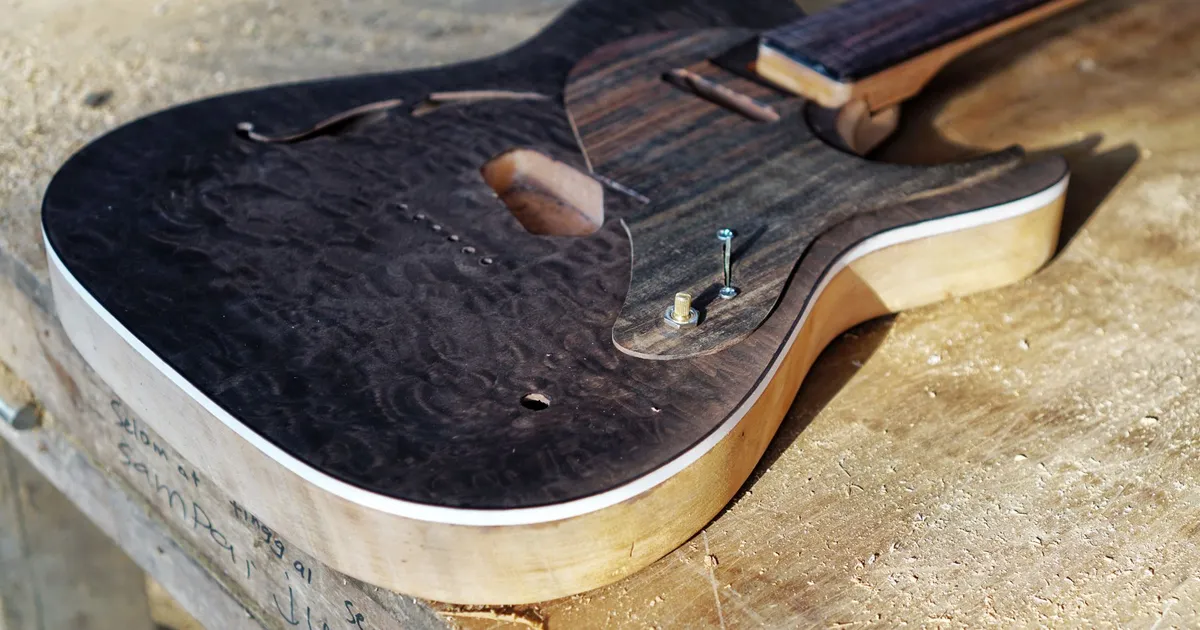
Tonewood is wood chosen because of how it sounds, feels and behaves in an instrument. For a buyer, that adds requirements that ordinary lumber does not have: straight grain, exact cuts, matched sets, tight moisture control and sometimes figure that is graded by eye. It also adds paperwork, since several of the best-known tonewood species are protected.
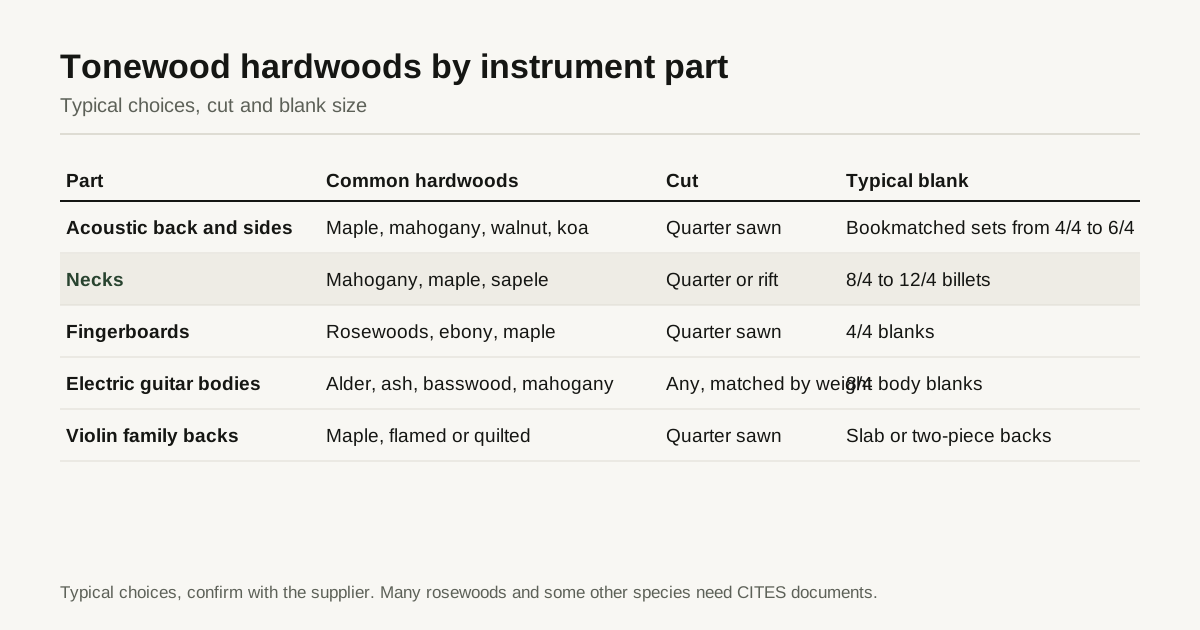
This guide looks at the hardwood side of tonewood: which species go in which parts, what cuts and sizes instrument makers buy, how moisture and figure grades work, and what to write on an RFQ. The focus is lumber for factories, workshops and parts suppliers, not finished instruments.
What makes lumber tonewood
Instrument makers look for a mix of properties, and each part has its own priorities:
- Straight grain with little runout. Fibers run along the length of the part, so the wood is stiff and does not twist.
- Stability. Instruments live through changes in humidity, and tops, necks and fingerboards must not move.
- Stiffness for its weight. A light, stiff wood carries vibration well. Makers often judge this by tapping or weighing.
- Consistency. Parts in one batch should match in weight, color and stiffness.
- Workability. The wood must plane, carve, bend and finish without surprises.
The NHLA grades do not measure any of these. They judge clear cuttings, which is a different question. A tonewood buyer uses the lumber grades only as a starting point and adds specific rules on top.
Species by part
Typical choices, with the hardwoods in the foreground. Softwood tops such as spruce are a separate trade and are not covered here.
| Part | Common hardwoods | Typical blank | Notes |
|---|---|---|---|
| Acoustic back and sides | Maple, mahogany, walnut, koa, rosewoods | Bookmatched sets, about 0.2 to 0.25 in thick when dressed, resawn from 4/4 to 6/4 | Quartersawn for stability, figure for appearance |
| Violin family backs and necks | Maple, in flamed or quilted sorts | Slab or two-piece backs, neck billets | Figure is graded by eye |
| Necks | Mahogany, maple, sapele | 8/4 to 12/4 quartersawn, about 3 in by 3 in by 36 in billets | Rift or quarter sawn |
| Fingerboards | Rosewoods, ebony, maple, pau ferro | 4/4 quartersawn blanks | Often supplied cut to size |
| Electric guitar bodies | Alder, ash, basswood, mahogany, maple | 8/4 body blanks, glued up or one piece | Weight and look are the main criteria |
| Bridges, bindings and small parts | Rosewood, ebony, maple, walnut | Small blocks and squares | Dense and hard |
Some of these species are covered elsewhere in this series. See our guides to hard maple vs soft maple, sapele and mahogany and white ash supply.
Typical properties
| Species | Janka hardness (typical) | Typical use |
|---|---|---|
| Hard maple | about 1,450 lbf | Necks, backs, sides, violin parts |
| Mahogany and khaya | about 800 to 900 lbf | Necks, backs, sides, bodies |
| Sapele | about 1,400 lbf | Necks, backs, sides |
| White and swamp ash | about 1,200 to 1,320 lbf | Electric guitar bodies |
| Red alder | about 590 lbf | Electric guitar bodies |
| Basswood | about 410 lbf | Electric guitar bodies, lightweight parts |
| Black walnut | about 1,010 lbf | Backs, sides, bodies |
These are typical values for the species, and individual boards vary.
Cut and orientation
Instrument makers pay for cut as much as for species.
- Quartersawn. Growth rings near vertical to the face, at roughly 60 to 90 degrees. Most stable and stiffest across the width, and it shows ray fleck in some species. Standard for tops, backs, necks and fingerboards.
- Rift sawn. Rings at roughly 30 to 60 degrees. Straight lines on both faces, also stable, and common for necks and fingerboards.
- Flat sawn. Rings under about 30 degrees. Cheaper, and used for some electric guitar bodies, where the wood is thick and glued up.
Our guide to plain, quarter and rift sawn hardwood explains the differences and how to specify the ring angle and a minimum percentage on an RFQ. Tonewood buyers often want a tighter rule than ordinary lumber, for example rings at 75 degrees or more, and they judge boards by their end grain.
Sizes, sets and forms
Suppliers sell tonewood in several forms:
- Lumber. Boards, often 4/4 to 8/4, surfaced or rough, sold by the board foot. Instrument factories buy lumber and cut their own parts.
- Blanks and billets. Cut to part size, such as neck billets and body blanks. They save the buyer a step and are priced per piece.
- Sets. Matched, bookmatched pairs or sets for acoustic backs and sides, or for a full instrument kit.
- Squares. Small turned or cut pieces for tool handles, bridges and fittings.
Dimensions have to be specific. A request for a 3 in square neck billet should state the finished and rough sizes, the length, the cut and the allowed runout. A match for color and weight within a lot is another request to write down.
Moisture and aging
Instruments are finished at low humidity, so makers want dry wood, and they want it stable.
- Target. Many makers use 6 to 8 percent, often stored in a controlled room at about 45 to 50 percent relative humidity.
- Spread. The spread within the lot matters as much as the average.
- Stress. Ripping and resawing thin parts exposes drying stress, and tonewood needs gentle schedules and stress relief. See our kiln drying guide.
- Aging. Some makers prefer air-aged stock, kept for years after drying, and pay a premium for it. The marketing claims around aging vary, so ask for the dates and the storage conditions.
Check moisture on arrival, as described in our moisture meter guide. For thin resawn parts, an oven-dry check on a sample resolves most disputes.
Figure and grades
Figure is the visual pattern in the wood: flame, quilt, birdseye, curl, spalting and others. It has no standard grading. Sellers use letter or word grades, such as AA, AAA, AAAA, master or museum, and the meaning changes by seller.
- Ask for photos of the exact blank or set, in good light, wet or finished, since figure looks flat on dry rough wood.
- Agree what each grade means: figure strength, color, defects, grain straightness.
- Check for runout by end grain and edge, not only face.
- For sets, ask how closely the pieces match.
Because figure drives price, the difference between grades can be much larger than the difference between species. A plain set and a heavily figured set of the same species can differ in price by several times.
Legality and protected species
Tonewood species include some of the most regulated woods in trade. Many rosewoods and a few other species are listed under CITES, and others are listed on national lists or subject to export restrictions. Rules differ for raw wood, semi-finished parts and finished instruments, and they change from time to time.
This is general information, not legal advice. Ask the supplier:
- Which species and country of origin, with the botanical name
- Which CITES or national documents apply, and who issues them
- Whether the wood is pre-convention or from verified legal stock
- Which Lacey Act or due diligence records are available for your market
Also ask for certification claims, such as FSC, with the certificate number, where they apply. Our guide to phytosanitary and fumigation rules covers plant health rules that may also apply.
Supply and price
Tonewood supply is thin and specialized. A mill that sells ordinary lumber may have a small amount of select quartersawn stock, and specialist suppliers sort and grade by hand. The price depends on species, cut, figure, grade, size and aging, with protected species costing much more. Volumes are small. Buyers who need steady volume of one species should agree on a forward plan with a supplier, so the supplier can set stock aside.
Compare quotes on a like-for-like basis, with the same tally method, and the same grade definitions. Our guide to board feet and pricing explains tally methods.
Questions for the supplier
- Which exact species and origin are in this lot, with the botanical name?
- Is the wood quartersawn, and what ring angle and runout limit do you apply?
- How was it dried and how long has it been stored, and at what humidity?
- Can you send photos of the actual blanks or set, including the end grain?
- How do you grade figure, and what do your letter grades mean?
- Which permits and certificates are available, and how long do they take?
- What is the minimum order, and can you hold stock for a repeat order?
A supplier who sells tonewood regularly answers these quickly and with specific detail. Vague answers, or catalog photos instead of photos of the actual wood, are a signal to ask for a sample before ordering.
What to put on the RFQ
- Species with botanical name
- Part and form: lumber, blanks, billets, sets or squares
- Cut and ring angle: quartersawn, rift sawn, minimum percentage
- Dimensions: rough and finished, with tolerances
- Grain rules: runout limit, straightness, defects
- Figure grade and what it means, with photos
- Moisture: target, spread and stress relief, and aging if required
- Documents: legality, CITES or national permits, certification
- Packaging, tally method and shipping terms
Closing checklist
- Choose the species by part, not by name
- Write the cut and the ring angle
- Ask for photos of the actual blank or set
- Set moisture and spread, and check on arrival
- Confirm the paperwork for protected species before ordering
If you want tonewood lumber quoted by several suppliers, send your lumber RFQ with the species, cut, sizes and documents you need. We pass it to up to 3 mills or yards that carry the item, and they reply to you directly.
Frequently asked questions
What does AAA mean on tonewood?
AAA, AAAA and similar marks are the seller's own figure and grain grades, not an industry standard. They usually describe how straight the grain is, how much figure the wood has and how clean the color is. Ask for photos of the exact set or blank, and agree what each grade means in writing.
Why do makers want quartersawn tonewood?
Quartersawn wood has growth rings near vertical to the face, so it is stiffer across the width and more stable with changes in humidity. For tops, backs, necks and fingerboards, that stability and the straight grain are worth the higher cost and lower yield.
Do I need permits for rosewood and similar species?
Many rosewoods and a few other tonewood species are listed under CITES, so cross-border trade in raw wood needs permits, and there are specific rules for finished instruments. Check the current listings and national rules for your route before you order, and ask the supplier which documents they can issue.
Know what you need? Send the spec.
Tell us the species, grade, thickness and board feet. We pass it to up to 3 mills or yards that carry it and reply within 24 business hours.
Send my lumber RFQ